
Podcast
99% Invisible
It discussed how the lottery, a seemingly harmless form of entertainment, has become a pervasive social phenomenon that fuels an irrational belief in quick riches and serves as a regressive tax on the poor.
And he says it isn't just the people playing the lottery who irrationally think the game will solve all their financial woes.
— Episode: For a Dollar and a Dream
Episode: For a Dollar and a Dream
It discussed how the lottery, a seemingly harmless form of entertainment, has become a pervasive social phenomenon that fuels an irrational belief in quick riches and serves as a regressive tax on the poor.
And he says it isn't just the people playing the lottery who irrationally think the game will solve all their financial woes.
Jonathan says it isn't just the people playing the lottery who irrationally think the game will solve all their financial woes.
The states running the lotteries also suffer from the same delusion.
That is, of course, how we have lotteries in the first place is voters, policymakers who believed wishfully, stupidly, hopefully that a lottery would solve all of their financial problems.
And despite mounting evidence, you know, even after other states that failed and failed and failed again, these voters and policymakers reasoned that a lottery would solve all their financial problems in the exact same way that gamblers are sort of hooked on this belief that it's going to work for them.
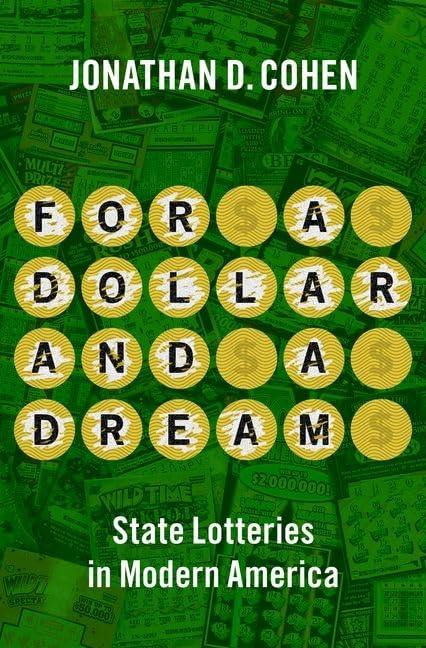
The book is called For a Dollar and a Dream State Lotteries in Modern America.
Episode: For a Dollar and a Dream
Jonathan D. Cohen, a historian, explained that the lottery is not a solution to financial problems for either the players or the states. This was discussed in his book, "For a Dollar and a Dream: State Lotteries in Modern America."
Jonathan D. Cohen. He's a historian and author of the book For a Dollar and a Dream, State Lotteries in Modern America.
The book is called For a Dollar and a Dream State Lotteries in Modern America.