
Podcast
99% Invisible
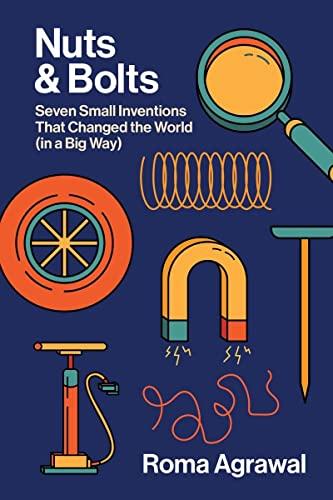
In the book, Roma Agrawal takes seven ordinary objects and explains how they are actually extraordinary feats of engineering. She discusses the origins of each item, how they were made in the past, and how they are still relevant today.
Roma recently wrote a book that's actually called Nuts and Bolts, Seven Small Inventions That Changed the World in a Big Way.
— Episode: Nuts and Bolts
Episode: Nuts and Bolts
In the book, Roma Agrawal takes seven ordinary objects and explains how they are actually extraordinary feats of engineering. She discusses the origins of each item, how they were made in the past, and how they are still relevant today.
Roma recently wrote a book that's actually called Nuts and Bolts, Seven Small Inventions That Changed the World in a Big Way.
So the Renaissance scientists, engineers, maybe even artists, you could call them, came up with a list of six simple machines, which were the lever, the wheel and axle, the pulley, the inclined plane, the wedge and the screw.
And I started to think about, you know, even within the very complex technology that we now have, very different from the Renaissance era, what are the little fundamental pieces that I think make up the modern world?
But I mean, fundamentally, and I never heard this described before until I read your book, is that a spring is this device for storing energy and being released when we need it to, which really broke open my mind of what all the things that could be a spring.
So even though he invented this incredible device specifically, which was called a Kohira, which did a very difficult job of receiving and interpreting electromagnetic signals of the sort that he was passing through rooms and people, you know, the radio, Marconi's invention wouldn't have existed without that.