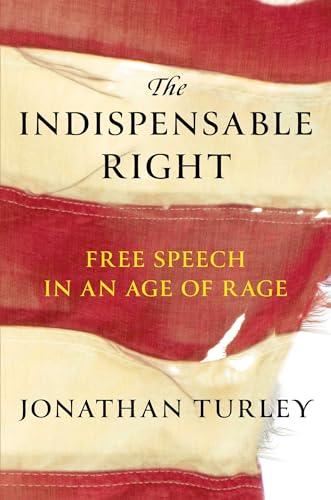
Turley asserts that the fear of reprisal has become a significant factor in the decline of free speech in America. He highlights the intolerance and orthodoxy that have taken hold in higher education, spreading to the media, corporate world, and government.
"
But in the real world, Professor, the world I live in--and I don't know whether you live in it or not, but most law professors don't. They're pinheads and they live in a bubble. If you speak your mind in this country, you are putting yourself at risk. People will try to hurt you. Number one. Now, on page, on chapter 27, you go all through this. But I'm wondering how much of a factor the fear of reprisal has become in America on the subject of freedom of speech.
Well, it is an enormous factor. And we saw this building, at least I saw a building, decades ago. This came from higher education. We started to see this intolerance, this orthodoxy. Conservative Republican faculty have been purged from many schools. And surveys done, and there's multiple surveys. These are self-identifying surveys where professors are describing themselves. And in about 40 percent of some of those surveys, there was not a single Republican left on certain faculties. And they have largely replicated themselves. And so the academy now runs from left to far left. And the level of intolerance is something that I never imagined would take hold of higher education. And that is now metastasized into the media, into the corporate world, into government.
And one of the things that this book talks about is that this isn't our first age of rage, but it's the most dangerous one for free speech.
Well, it's far less prominent and it's very hard to find. One of the reasons is that conservatives don't really control many media outlets, for one thing, even if they were going to do that. There are some legislatures that have passed efforts to try to prevent certain theories from being taught. Those have not been successful. Some of them have been struck down. But the means to conduct this anti-free speech movement is just far, far greater.
And by the way, when you talk about destroying people, in the chapter dealing with higher education, I try to go through to explain how bad this has become. I talk about professors that have committed suicide because what they do is they take away everything you value as an intellectual, your ability to publish, your ability to go to conferences. There was one guy in North Carolina that they hounded for years. And they did it again when they found out he gave a joke at a private dinner to like four people. And they hounded him again, put him under investigation, and got him to agree to resign. And on the last day, his last day as a professor, he went home and blew his brains out. And the reason is I think he thought, this is my last day. This is the only thing I ever wanted to do. I can understand him now. They took his life away from him.
So we hope all our listeners and viewers worldwide will consider the book. And we really appreciate your time. You're on TV every hour on the hour now. But it's good. You and Victor Davis Hanson, I got to say this personally, I read everything you guys put out. You know me, I'm pretty cantankerous. So I'm fine in little things where, you know, but that is my highest compliment because I'm so busy. I can't see straight. But when I see Hanson or you writing on the Hill or a column, even if it's something I'm not particularly interested, I read it. So keep doing what you're doing professor, really appreciate it.