Podcast
Stuff You Should Know
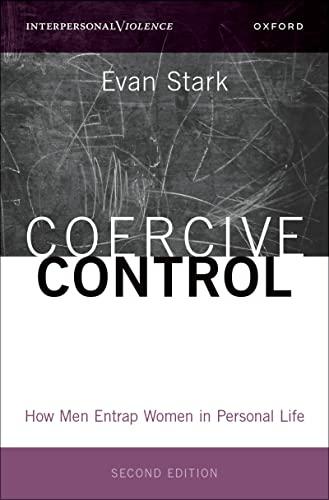
This book was published in 2007 and it was written to highlight the idea that abuse is not just physical violence, but deprivation of freedom by controlling a partner's autonomy. The author was inspired by his wife, a physician, who noticed that more women than statistics indicated were entering the ER after being beaten by their partner.
He wrote a book in 2007 called Coercive Control, colon, of course, the Entrapment of Women in Personal Life.
— Episode: Coercive Control, the Invisible Basis of...
Episode: Coercive Control, the Invisible Basis of Abuse
This book was published in 2007 and it was written to highlight the idea that abuse is not just physical violence, but deprivation of freedom by controlling a partner's autonomy. The author was inspired by his wife, a physician, who noticed that more women than statistics indicated were entering the ER after being beaten by their partner.
He wrote a book in 2007 called Coercive Control, colon, of course, the Entrapment of Women in Personal Life.
So he started looking into like they did some side research together and they found something that people hadn't really realized before that in addition to women reporting being beaten, they also reported this whole kind of cluster of other mistreatment at the hands of their spouse.
And that they kind of followed a pattern and those patterns really resembled the coercion that Albert Bitterman had identified back in the 50s.
So he took this kind of like little germ that grew out of like a flower that was in the midst of blossoming and found that that germ led to actually the foundation that the flower was growing out of.
And as he started to follow it, he realized that actually that's not just this little part of the flower.
This is the thing, the substance that the flower is growing from.
So in 1990, Stark opened a forensic social work practice where he would go in and testify in court on behalf of these women and say, you know, and sort of preach this gospel basically on behalf of these women saying you can't take their kids away.
And he said that there is basically just different kinds of domestic violence and coercive control is one of just a few of them.
So as Stark's research kind of gelled and solidified, like you said, in the 80s, 90s, especially up until I think 2007 when he published that book, like you said, he came up with basically a science and symptoms of coercive control as a form of domestic abuse.
And there is physical violence that is actually not just a part of coercive control, but in relationships where the husband dominates the wife through coercive control.
It's like, no, there's focus on this, but also expand your focus to include all this other stuff as well.
And she did something that Livia rarely does, which is sort of include her own speculation.
And I totally agree that when Stark was doing his work sort of in the late 70s and early 80s or through the 80s, things were different, dynamics were different.
But from where Stark was coming from, I totally get where he would say essentially that like even if violence, like if a woman hits a man, it's very, very rare for a woman to have the kind of economic control and financial control in the household.
There's a 2021 Australia study that said that if you earn more than half of the household income, your risk of being a victim of domestic violence as a woman increases 35 percent.
And in cases where this is way before like 11 years for that, when you cited she was talking about the fact that when a woman earns more than her husband, that threatens a man's masculinity. And that's when trouble happens.
And that 2022 study, just to be clear, was when they have found women who have been the perpetrator of intimate partner violence in those situations, they are more likely than their male counterparts to abuse course of control rather than physical abuse, which is a big distinction.
But there's still it seems to be up in the air, you know, which way to go. But I feel like people are going more toward outlawing coercive control than saying like, whoa, whoa, whoa, we shouldn't do that.
And Livia cited this California case that where a woman was able to use coercive control where she did not suffer any physical violence, but was controlled by her husband like who gave her pages and pages of instructions on how to do everything from wash the dishes to those are the movies.