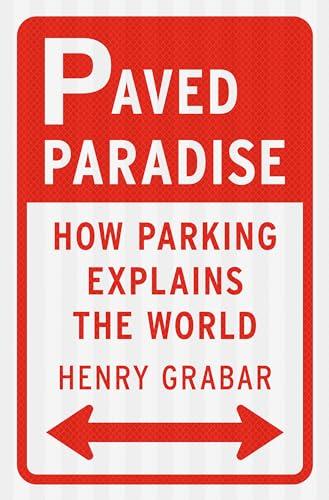
The book examines the parking crisis in American cities, highlighting the complex history and politics of parking regulations, and their impact on urban design, housing, and transportation. The book provides a detailed account of how parking policies have reshaped cities for the last 80 years.
"
Parking has a special place in the mind because we think of LA as a sort of an iconic place to drive With its famous freeways and its palm-lined boulevards and all that so I think it's a place where perhaps you get the highest level of contrast between the kind of utopian idea of driving and The dirty reality that is looking for a parking spot in LA that dirty reality plays out all the time on the local news
Here's Henry Grabar these parking minimum laws would become Virtually ubiquitous in the United States in the second half of the 20th century But in LA at this time, I think you can understand the logic because they're sitting there and they're saying we are Struggling to create as much parking as possible both on the part of the city government Which is building public parking like the massive Pershing Square parking garage and also the private, you know entrepreneurs and department store owners themselves who are saying our survival depends upon Finding parking while this rule made a lot of sense for a city without mass public transportation It also had some gnarly consequences Suddenly lots of apartment buildings in the city weren't compliant with parking regulations
The bungalow courts weren't alone if developers wanted to build a two or three story brick apartment building They needed to buy the lot next door to just for the parking People in LA saw the negative consequences of parking minimums pretty much right away Like even in the early 30s the LA Times published this article that the parking requirements essentially made it so no Multi-story masonry buildings were being built anymore in LA. So very early on you can see the consequences But Los Angeles didn't back off their parking laws
So if you're building a condo, for example in Los Angeles in the 1990s, you need to include 2.25 to 2.5 covered on-site parking spaces for every unit So let's do the math on this Roman You're a developer in a Los Angeles neighborhood and you have a small parcel You inherited from your grandfather and it's a blank lot and you'd like to put some some housing on this lot Help to solve your city's housing crisis if you want to build five units You are required to include five times two point five twelve point five and then round up thirteen parking spaces Thirteen parking spaces on an infill lot. You can't fit those on the ground floor So now you're now you're talking about a two-story garage or potentially an extremely expensive underground excavation just to put five condos on this lot and Five is not a large number that's the size of your average sort of infill brownstone on the Upper West Side and And suddenly that kind of construction becomes completely impossible Because of both the geometry of putting those parking spaces on a small lot and also the cost because building parking is very expensive
So we're back with Henry Gabbar Congratulations on the book. It is so good. I loved reading it. It's easy breezy. It has some stuff I know some stuff it was brand new to me Why did you decide to focus on parking for the last two five six seven years of your life? Cuz I just love it so much Roman can't get enough of it No, but The truth is that I I'm a journalist I write about cities and so I write about urban subjects like housing and transportation and flooding and infrastructure and in subject after subject and in story after story this thing kept coming up and this thing was this like vast system of parking that we've Established but that no one really understands and that exerts all these like hidden consequences On the way that all these other city systems work It can be something as basic as like why do we not have bus rapid transit? Like why do buses get stuck in traffic and and they have to run behind all these cars and and the answer is often just Because the city is unwilling to mess with the street parking, right? I also just think it's interesting Yeah, I mean, I know there's like a joke that like a parking That's so boring and I've definitely heard people say like oh wow parking fun But then you get them talking about it and it turns out that like everybody's got an opinion