
Podcast
Pod Save America
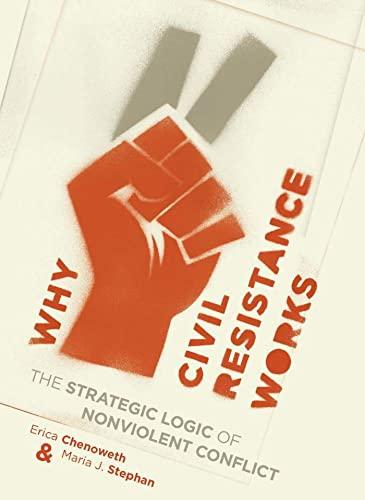
The book detailed research into 323 maximalist campaigns over the last century, concluding that campaigns relying on nonviolent civil resistance were more than twice as likely to succeed as armed conflicts. The research also laid the groundwork for the three and a half percent rule regarding mass participation.
We wrote a book in 2011 called Why Civil Resistance Works. And what we did there is we looked at 323 campaigns that you would call, say, maximalist campaigns. So they were trying to oust dictatorships...
— Episode: The 3.5% Protest Rule That Could Bring D...
Episode: The 3.5% Protest Rule That Could Bring Down Trump
The book detailed research into 323 maximalist campaigns over the last century, concluding that campaigns relying on nonviolent civil resistance were more than twice as likely to succeed as armed conflicts. The research also laid the groundwork for the three and a half percent rule regarding mass participation.
We wrote a book in 2011 called Why Civil Resistance Works. And what we did there is we looked at 323 campaigns that you would call, say, maximalist campaigns. So they were trying to oust dictatorships.
And we found in that book a couple of important things. One is that the campaigns that had relied on people power, which is civil resistance, nonviolent civil resistance, where unarmed civilians prosecute the conflict using strikes, protests, boycotts and other unarmed methods, were more than twice as likely as their armed counterparts to have succeeded.
Cases like the Philippines people power movement or the Polish solidarity movement or even the latter part of the South African anti-apartheid movement were actually using a technique of struggle that was more effective than, say, the Algerian revolution or even the Cuban revolution, which many people had held up as sort of a hallmark of the success of armed revolutions.