Podcast
Strict Scrutiny
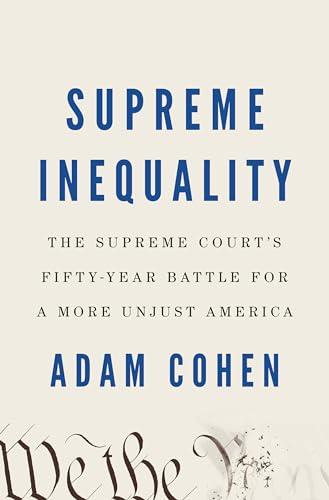
The book was highlighted for its analysis of how the Supreme Court’s conservative shift over the past fifty years has amplified economic inequality by favoring wealthy and corporate interests over the poor and disadvantaged. Melissa Murray introduced the work and Adam Cohen discussed its arguments, citing cases like Lily Ledbetter and Jack Rose that illustrate the Court’s harsh rulings against discriminated individuals. Both hosts emphasized its importance for understanding the Court’s role as a force that has increasingly undermined fairness in society.
Episode: "Three Generations of Imbeciles"
This recent book discussed how the Supreme Court, since the late 1960s and early 1970s, had been consistently siding with the rich and powerful against the poor and weak. The speaker noted that this conservative trend in the court has been a driving force in increasing economic inequality in American society.
He's also the author of five books, the most recent of which is Supreme Inequality, the Supreme Court's 50-year battle for a more unjust America.
And then certainly in this abortion debate where it's sort of gained new life but also in this question about. Genetic theory about designer genes about whether or not we can actually use eugenics for social good like this idea of good versus bad eugenics and here you are right on the forefront of all of it and I think one of the things that imbecile sort of speaks of or at least gestures toward is.
The idea of. Of supreme inequality is you know I grew up sort of in the shadow of the war in court as I think you know many of us did and the war in court gave us our idea of what the supreme court and the law could be as a force for you know fighting for the underdog and making a fairer society but.
Episode: BONUS: Supreme Inequality with Adam Cohen
The book examined the conservative tilt of the Supreme Court over the last 50 years, showing how it stopped protecting the rights of the poor and disadvantaged, instead prioritizing decisions that favored wealthy and corporate interests.
In the book I say, you know, one thing that we're not talking about enough is the extreme role that the Supreme Court has played in this inequality.
And that's why the book is the last 50 years of the Supreme Court.
It's super depressing, but like that's cool. That's okay.
I was much more I'd say bread and butter about what in the employment context I talked about like the first three cases in the introduction may it advance and you know Lily Ledbetter and Jack Rose these stories are so horrible right that the Court five to four rejects people who have been horribly discriminated against in the most callous way and also make up the laws they do it.