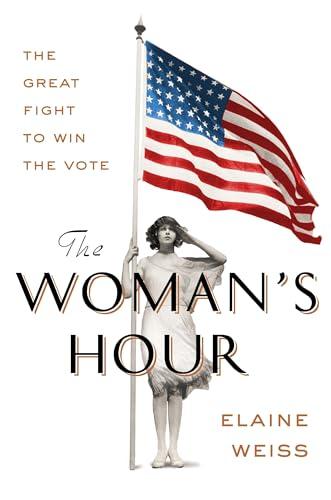
"Both a page-turning drama and an inspiration for every reader"--Hillary Rodham Clinton
Nashville, August 1920. Thirty-five states have ratified the Nineteenth Amendment, twelve have rejected or refused to vote, and one last state is needed. It all comes down to Tennessee, the moment of truth for t...
The book was favorably mentioned for its detailed account of the fight for women's suffrage, revealing the significant and often overlooked opposition faced by suffragettes, including opposition from other women. It challenged common assumptions about the movement.
"
I loved that book The Women's Hour about the passing of the of the amendment that gives women the right to vote.
— Episode: Former Attorney General Eric Holder on t...
Episode: Former Attorney General Eric Holder on the Value o...
The book was favorably mentioned for its detailed account of the fight for women's suffrage, revealing the significant and often overlooked opposition faced by suffragettes, including opposition from other women. It challenged common assumptions about the movement.
"
I loved that book The Women's Hour about the passing of the of the amendment that gives women the right to vote.
Episode: Sam Koppelman on Voting Rights and Serving the Com...
The book was mentioned positively and discussed in relation to the women's suffrage movement and the sacrifices and efforts involved in securing the right to vote for women. A specific example concerning a legislator's vote influenced by his mother was highlighted.
"
Have you read The Women's Hour? Yes about the past grade.
The 19th of it's incredible you're just like you think you think about how long that took it's like a hundred years I went and I went to that hotel in Nashville like right before the pandemic you're just sort of standing in this lobby and you're just like these people fought for it this not just they fought for a thing that like was hard but they fought for a thing that was literally inconceivable right not that long ago like it's not yeah I see I was just reading about John Stuart Mill and he you know he's this brilliant philosopher he ends up running for like parliament or comment the House of Commons I don't really know how the British system works but anyways he's they're passing some bill and he stands up this is like in the mid 1800s he stands up and he goes I motion that man in this law be changed to person right then that it should apply to everyone and he's literally just like the entire place just erupts in laughter like it's not not just like hey should these people be able to vote but like we should think about half the population as we're passing well it was and and it was met with you know profound laughter but it's the first time that this concept of like women having personhood is introduced into British politics like in the legislative system so yeah that that a like it's not just like if person can affect structural change but a person can utterly redefine the structure itself and that this takes both a lot longer and also happens faster than you think yes and you know it's worth thinking about the people on the periphery of that who exercise their agency in this you know with Mill I think his wife actually wrote with him a lot about these feminist thoughts hard to imagine he'd have been taken that stand and writing person I'm not sure about the exact chronology but without that influence and then I think the best moment in women's hour which we talk about in this book is you know all of these women leave this lead this movement and the vote keeps being like 82 to 82 or something and there's this one guy it's the woman yeah the one and his mom but he this book yes but his mom then comes and says like you should you should like do the right thing today and like gives him a rose and then he ends up doing it yes and like her agency is not I mean that's like the mother of a legislator who potentially radically changed the history of America no I mean he absolutely did you think about yeah it's an individual camp make a difference one mom writing a letter to a son who is the deciding vote in a state legislature which immediately makes it the law of the land in the United States if he had gone the other direction I believe Tennessee was the last state so it was so if Tennessee hadn't passed it it would have been it would have been effectively dead and I think obviously the the woman who writes the letter obviously deserves a huge amount of credit but like also both of them he if I remember correctly from the book and this is where I think courage and sacrifice are so interrelated is that he was the sole sort supporter of his mother who was elderly and ill and he wrecks his political career to make this vote yeah so he's not just voting against his party or in an un potentially unpopular thing but he's also cutting he's cutting this political throat but also his financial throat at the same time but he makes the decision and then we go oh a democracy is too big and unwieldy individual cannot make a difference yes no it's part of what's so inspiring looking at the history and even the present is the folks who just keep doing the work I mean one of my favorite stories in the book is there was this college student a North Carolina A&T named Love Caesar and her campus had been gerrymandered split down the middle so essentially meant that all of these black students and teachers their votes didn't matter because they were split between two districts not in large enough numbers to make a difference in either district and she came and drew chalk down the middle of campus gerrymandered this niche issue people don't understand she draws brings draws you know this huge line down campus to say you know you could lit you could dorm could be in district three in your class could be in district four how does this make any sense you're supposed to have congressional districts that represent communities and with that chalk helps draw the attention of the country to North Carolina as gerrymander big lawsuit comes in those maps are thrown out that's a random college student at an arbitrary school in North Carolina making a difference for millions and millions and millions of people and so the idea that you don't still have the power to do that is completely incorrect and it's just about finding that will and deciding to do it well i'm glad we're talking about the women suffrage movement because it's a lot less loaded and controversial which is what the point I want to make right so as we talk about you know like i think for instance some people go oh obviously women some women wanted the right to vote and then it was probably that either people didn't think it was that important or some men were opposed to the idea of course when you zoom in you find out actually a lot of women were opposed yeah I'm getting the right to vote and it was this bitter nasty fight for like decades but the the idea to me and I talked about this I had Kate Fagan on the podcast who I love if you haven't read her book what makes Maddie run you should it's incredible but but I was talking about I was sort of riffing on it and now I it's something I haven't written about but I want to I have this idea that history there's this kind of dark energy in history in America but in all countries this sort of there's this kind of fearful dark race it could it takes a number of labels but it's it's effectively just a dark energy that's opposed to usually new things or the expansion of rights or inclusion whatever so like I think about that dark energy there's like in retrospect obviously women should have the right to vote and all women more or less agree with this idea but at the time there was a dark energy there that was vehemently opposed to this idea like in the book she talks about this moment where like this this mother on her on her deathbed says to her daughter I need you to dedicate your life to fighting against the suffragette movement so yeah I'm so you think about that dark energy that a woman is her death wish is that her daughter like something is taken a hold of this person right so there's this dark energy so and it's as bitter fight and it goes down splits down the middle one guy defeat when one guy makes his vote it defeats the dark energy and then where does that dark energy go shortly thereafter you know maybe that's the dark energy that is the resistance to the expansion of the administrative state in the great depression right or it's the dark energy that then goes into fighting and attempting to secure and fight for Jim Crow right and and then and then that's the civil rights movement except there's this kind of dark energy that's always there and we're like fighting against it and we feel like we vanquish it and then it goes away and then it regroups and it identifies another issue that you wouldn't think people would care that much about but they do right and I'm curious what you think of that theory because when I think of voting rights and the fight like that there is an opposition to the idea of voting rights is to me in a sense of how insane and unpredictable this dark energy is because like why would a person be opposed to such a thing right like it seems so odd and yet here we are yeah I think that's exactly right but one interesting wrinkle is how seductive the dark energy is to those fighting for the right things you know just to because we're on the suffragists I mean the initial batch of suffragists the people who organized the Seneca Falls Convention was with Katie Stanton and them they were stops on the underground railroad so when folks were escaping from slavery they could take safe harbor in their homes they understood that people different races were equal which makes sense they understood that people different genders are equal as well then as they're fighting for the right to vote they make this strategic decision where they appeal to those who are in power and say you know if you give white women the right to vote we're going to act as a force to stop against the encroachment of black Americans in our democracy and they sort of co-op that dark energy a little bit in an act of self preservation but what it means is that when that big moment happens in 1918 and they get the right to vote well it's like kind of it's kind of colored or not colored it's kind of white and so they have to figure out like okay what are we going to like what are we going to do the black women who were left out and so they go and fight against this other dark energy which is Jim Crow but it's really a continuation of the energy that was trying to stop women from voting in the first place it just survives in this sort of like more refined racist strain and that then you know we then get to the Voting Rights Act of 1965 black women black men Native Americans everyone else can vote but the darkness doesn't really go anywhere and it's how you end up in the current crisis which most of the books about but you know for a bunch of decades there the darkness went to other issues they weren't focused on voting rights specifically because that just seemed like it was consensus yet three Republican presidents in a row reauthorized the Voting Rights Act when George W. Bush reauthorized it for the final time 2006 the vote in the Senate was 98 to zero Mitch McConnell Hillary Clinton everyone came together and said let's do more Voting Rights Act but then 2013 there's this big Supreme Court case Shelby County vs. Holder my co-author Eric Holder prefers to just call the Shelby County case for obvious reasons and what that case does is it guts a significant portion of the Voting Rights Act and nullifies it and what happens is the darkness realizes like oh we can take advantage of this moment and once again people across the country decide that they can engage in insidious forms of voter suppression and it's worth noting that that darkness masks itself during you know if at any given time it were obvious which side the darkness was it'd be pretty easy for you to just go to the side of the light but you look at Jim Crow laws you know we're talking about literacy tests that wasn't on its face a bill that had to do with race but if you recognize that they weren't going to be administered the same way to black Americans and white Americans who'd understand it wasn't fair we'd recognize that black Americans weren't allowed to read at all for most of American history till that point you understand it wasn't fair but it's hard always in the present this is one of the themes of the book to recognize you know who who the baddies are as the internet meme says and like you know the project is identifying where that darkness lies at different periods of time and finding ways to root it out all the stillings were active in life trying to make a difference trying to have a positive impact on the world they were suspicious of the pen and in flusters of people who just wrote about stuff who didn't do it but we've talked before about how you're only on this planet for like four thousand weeks let's say you work for 40 years of that time that's 40 hours a week 50 weeks a year 40 years that's 80 thousand hours your career is roughly 80 thousand hours it's a lot of time but it's also not a lot of time you really can't afford to waste it but if you dedicate yourself and end that time productively and effectively you can have a huge positive impact in the world you can serve the common good as the stokes talk about there's actually an awesome nonprofit called 80 thousand hours that gives free research and support to help people create positive impact with their career you can join their newsletter they'll send you a free in-depth guide that takes you through all the steps all the way to a concrete career plan they host an awesome job board with nearly a thousand open high impact career opportunities and they offer free one-on-one advice to help you switch paths there's also a great 80 thousand hours podcast which hosts super in-depth conversations with experts about how to best tackle pressing global problems you can join the newsletter right now get a free copy of their in-depth career guide sent right to your inbox just sign up at 80 thousand hours dot org slash stoic that's 80 the number 80 thousand hours dot org slash stoic 80 thousand hours dot org slash stoic and just to be clear they're a nonprofit and everything we provide is free always they're fully philanthropically funded their only goal is to help you have more impact in your career with those 80 thousand hours that you have on this planet to get started planning a career that works well sign up at 80 thousand hours dot org slash stoic
Note: The book recommendations on this page are discovered automatically from podcast transcripts, and may be incorrect or incomplete.