Podcast
What A Day
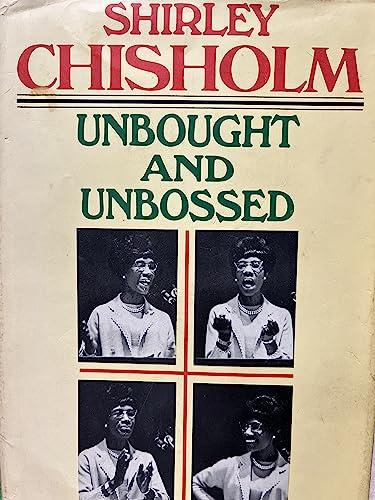
This biography was mentioned as a forthcoming book about Shirley Chisholm, focusing on her Black feminist power politics and inclusive approach to political issues. The author discussed Chisholm's experiences with misinterpretations and the challenges she faced as a Black woman in politics.
I saw a picture of her with my parents. My parents worked on the campaign in Massachusetts and I saw this well-dressed black woman sitting with them and I thought she was my Auntie Sally because my Au...
— Episode: Remembering Shirley Chisholm, A Catalyst...
Episode: Remembering Shirley Chisholm, A Catalyst For Chang...
This biography was mentioned as a forthcoming book about Shirley Chisholm, focusing on her Black feminist power politics and inclusive approach to political issues. The author discussed Chisholm's experiences with misinterpretations and the challenges she faced as a Black woman in politics.
I saw a picture of her with my parents. My parents worked on the campaign in Massachusetts and I saw this well-dressed black woman sitting with them and I thought she was my Auntie Sally because my Auntie Sally kind of had the same aesthetic and my parents corrected me.
In fact, when my mother was in the final throes of her leukemia battle, unbeknownst to me until she had transitioned, I did not know she had been putting together a book for me. And the final tab is for inspiration and it's printed speeches of Shirley Chisholm.
I called the book Champion of Black Feminist Power Politics because of the way that she understood power, that she understood how power worked and that the kind of power that she was seeking on behalf of the people was not heteronormative, patriarchal, white supremacist power.
Those early years of my life on the island of Barbados gave me the spirit, gave to me the spunk that was necessary to challenge all of these age old traditions.
But then, as you've read in the book, one of her person who became sort of her chief of staff, her executive assistant, helped introduce her to a wig shop and she rocked those wigs for several years. It was like part of her uniform, too, right? Like she had her dresses and her wigs ready to go.
Episode: Remembering Shirley Chisholm, A Catalyst For Chang...
This biography, written by Dr. Anastasia Kerr-Wood, explores Shirley Chisholm's life and legacy, focusing on her black feminist power politics and inclusive approach to social justice. The book delves into her experiences facing discrimination as a woman and a Black person in politics and how she overcame these challenges.
I saw a picture of her with my parents. My parents worked on the campaign in Massachusetts and I saw this well-dressed black woman sitting with them and I thought she was my Auntie Sally because my Auntie Sally kind of had the same aesthetic and my parents corrected me.
In fact, when my mother was in the final throes of her leukemia battle, unbeknownst to me until she had transitioned, I did not know she had been putting together a book for me. And the final tab is for inspiration and it's printed speeches of Shirley Chisholm.
I cried many nights because I was misinterpreted. She wanted to take things away from the black man. She's one that's going to divide the black men from the black women, all of this crazy stuff that was coming off the wall. But I didn't let it affect me that much because I understood our history.
Those early years of my life on the island of Barbados gave me the spirit, gave to me the spunk that was necessary to challenge all of these age old traditions.
I called the book Champion of Black Feminist Power Politics because of the way that she understood power, that she understood how power worked and that the kind of power that she was seeking on behalf of the people was not heteronormative, patriarchal, white supremacist power.
Episode: Happy Birthday Ms. Chis
Dr. Anastasia Curwood's biography of Shirley Chisholm was mentioned; it was described as forthcoming and focuses on Chisholm's Black feminist power politics.
She was running for president. And I did not know that because the press hadn't really covered her campaign.
She spoke fluent Spanish. She stood up for immigrant rights. She was against the Vietnam War. She was an early childhood educator. I mean, she was really a very progressive black woman, reproductive rights, the whole nine yards.
She called me little girl.
if you believe in making systemic change and if you believe in changing the rules of the game, she said, because you can't stay on the outside. You've got to get on the inside. Right. Remember, those rules weren't made for you. So you've got to help change the rules of the game.
I saw a picture of her with my parents. My parents worked on the campaign in Massachusetts, and I saw this well-dressed black woman sitting with them. And I thought she was my Auntie Sally because my Auntie Sally kind of had the same aesthetic. And my parents corrected me. They said, nope, that's Shirley Chisholm. She ran for president, and one day you could too.