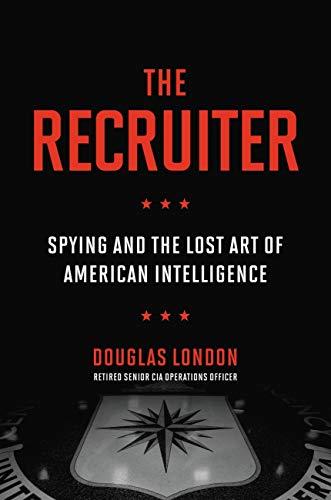

The author, a former CIA officer, discussed his book, which details the strategies used in American intelligence, including the strategy of leadership decapitation and its effects on the decentralization of terrorist threats. He also commented on the importance of the Patriot Act and Section 702 in counterterrorism efforts.
The United States pursued a strategy of leadership decapitation that I know is well-instrated in your book, going after the core leadership and logistics hubs and such to make it more difficult for th...
— Episode: No Spin News - Weekend Edition
Episode: No Spin News - Weekend Edition
The author, a former CIA officer, discussed his book, which details the strategies used in American intelligence, including the strategy of leadership decapitation and its effects on the decentralization of terrorist threats. He also commented on the importance of the Patriot Act and Section 702 in counterterrorism efforts.
The United States pursued a strategy of leadership decapitation that I know is well-instrated in your book, going after the core leadership and logistics hubs and such to make it more difficult for these groups as centralized organizations to pose a threat.
But at the same time, that strategy led to a decentralization of the threat. So we saw the rise of the Islamic State.
And there's a debate right now about Section 702 in terms of both collection and what US intel law enforcement can listen to.
It was the ability of the US Intel community and the Bureau to identify his communications with the South Cite affiliate. That wouldn't have happened without the Patriot Act and without Section 702.
Episode: Highlights from O'Reilly's No Spin News
The author, a former CIA officer and current Georgetown University professor, discussed his book, which details his experiences in the CIA and the evolution of American intelligence tactics. He commented on the changing nature of the jihadist threat, the effectiveness of the Patriot Act, and the challenges of counterterrorism in various regions.
The United States pursued a strategy of leadership decapitation that I know is well-instreded in your book going after the core leadership and logistics hubs and such to make it more difficult for these groups as centralized organizations to pose a threat.
But at the same time, that strategy led to a decentralization of the threat.
The Taliban has its own interpretation of the accord with the United States, which diverges from ours, which allows them to be a lot more supportive to Al Qaeda and its various partner groups than we would like or that we thought they were going to be.
Well, you're right, Bill. In fact, it's absolutely essential. And there's a debate right now about Section 702 in terms of both collection and what US intel and law enforcement can listen to.
Iran continues, as best I could tell, from open source information to host various groups such as al-Qaeda. But their nemesis assured with us is being the Islamic State, whose interests are untypical to theirs.
Episode: Twenty-Two Years After 9/11, an Update on the War...
This book was mentioned by the podcast host as providing insight into the topic of spying and American intelligence. The guest, Douglas London, who is the author, discussed the degradation of the jihadist threat, using concepts and information from his book.
He is the author of the book The Recruiter, spying in the lost art of American intelligence.
The United States pursued a strategy of leadership decapitation that I know is well-instructed in your book, going after the core leadership and logistics hubs and such to make it more difficult for these groups as centralized organizations to pose a threat.