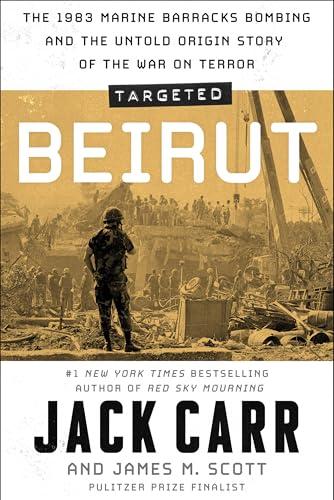

It was mentioned as Jack Carr's first non-fiction book, and is scheduled to be released in September 1983.
I had my first nonfiction coming out in the fall of 1983, Beirut Barracks Bombing.
— Episode: Daily Review With Clay and Buck - Jun 14...
Episode: Daily Review With Clay and Buck - Jun 14 2024
It was mentioned as Jack Carr's first non-fiction book, and is scheduled to be released in September 1983.
I had my first nonfiction coming out in the fall of 1983, Beirut Barracks Bombing.
Episode: Daily Review with Clay and Buck - Sep 27 2024
This non-fiction book details the 1983 Marine barracks bombing in Beirut and explores its impact on US foreign policy and the origins of the War on Terror. The author discussed writing this non-fiction book versus his previous fiction works, noting the heavier weight and responsibility involved in ensuring accuracy and respect for those affected.
I started this thing about three years ago when I pitched Simon and Schuster on the idea of a non-fiction series looking at different terrorist events and their effect on US foreign policy...
220 marines, 18 sailors, three soldiers killed that day...
What it did though is it taught Iran that terrorism works, and it worked by using proxies and really Iran set the rules for the war on terror back then...
You definitely feel a heavier weight with this, meaning in the fiction in the thrillers, the James Reece series, if I get something wrong because I do weave a lot of history into those thrillers, but if I get something wrong I can just say hey, it's fiction...
There are people still alive who responded to this bombing; we're digging their buddies out of that rubble with their bare hands, K-bar knives, shovel, maybe, crowbar if they could find one...
Episode: Hour 3 - Jack Carr
Jack Carr's first nonfiction book, which details the 1983 bombing of the Marine Barracks in Beirut and its impact on the war on terror, was discussed. The authors' surprise at Hassan Nasrallah still being alive, given Israel's capabilities, was also mentioned.
I started this thing about three years ago when I pitched Simon and Schuster on the idea of a nonfiction series looking at different terrorist events and their effect on US foreign policy, trying to capture those strategic operational tactical level lessons learned, while also humanizing these events for future generations so that senior level leaders know there are impacts to the decisions they make thousands of miles away from the battlefield in air conditioned offices.
And the only thing that surprises me about that is why it has taken so long. His predecessor was killed back in 1992 and he took over back then and is the secretary general of Hezbollah. And I just surprised that Israel has let him live this long, especially with the capabilities that they've had for decades now.
That's right, yeah, 220 Marines, 18 sailors, three soldiers killed that day. There were others killed between an embassy bombing which happened in April of 1983. Both people killed throughout that summer, fall until October 23rd.
And what it did though is it taught Iran that terrorism works and it worked by using proxies and really Iran set the rules for the war on terror back then and it's the model and the paradigm that we've been essentially adhering to ever since.
So you owe it to them to be as thoughtful, as respectful as you possibly can and to really get it right. You have to. There is no leeway.