
Podcast
Odd Lots
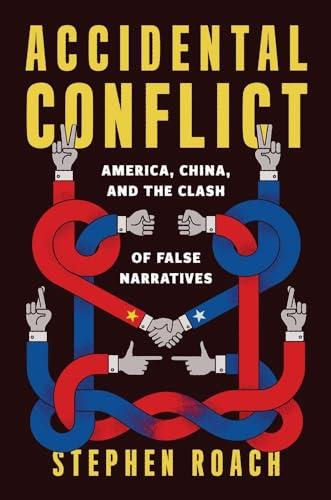
Stephen Roach discusses his book 'Accidental Conflict', warning about the dangers of the current US-China relationship and emphasizing that both nations have poisoned their relationship with politically expedient false narratives. He also highlights how the relationship has shifted from mutual trust to distrust, making it susceptible to an escalation leading to war. Roach also touches on the increasing tension between the US and China, particularly with respect to national security concerns and the potential for a new Cold War. He argues that China's ambition in technological innovation and its application to military capabilities should not be exaggerated as a threat. He also touches on the idea of the US building its own industrial capacity for strategic independence from China and argues that this approach may lead to a self-fulfilling prophecy of a more adversarial relationship. Roach also discusses the need for the US to reduce its budget deficit to lessen dependence on foreign savings.
I think that there has been a lot of exaggeration of the so-called security threat from China certainly they are moving ahead aggressively in the area of technological change and innovation and they'r...
— Episode: Stephen Roach Warns of Disaster From Our...
Episode: Stephen Roach Warns of Disaster From Our 'Sinophob...
Stephen Roach discusses his book 'Accidental Conflict', warning about the dangers of the current US-China relationship and emphasizing that both nations have poisoned their relationship with politically expedient false narratives. He also highlights how the relationship has shifted from mutual trust to distrust, making it susceptible to an escalation leading to war. Roach also touches on the increasing tension between the US and China, particularly with respect to national security concerns and the potential for a new Cold War. He argues that China's ambition in technological innovation and its application to military capabilities should not be exaggerated as a threat. He also touches on the idea of the US building its own industrial capacity for strategic independence from China and argues that this approach may lead to a self-fulfilling prophecy of a more adversarial relationship. Roach also discusses the need for the US to reduce its budget deficit to lessen dependence on foreign savings.
I think that there has been a lot of exaggeration of the so-called security threat from China certainly they are moving ahead aggressively in the area of technological change and innovation and they're applying these breakthroughs to their military capabilities as you would expect any leading power to do but I think personally we I've looked at a lot of this very carefully wrote about it in my last book called accidental conflict where I lay out the thesis that a lot of the national security concerns that have been expressed by politicians and by executive branch officials either in the Trump or the Biden administration are false narratives based on the presumption of intent on the part of China they cannot really be validated I mean just take electric vehicles I mean we had the spectacle of a commerce secretary Gina Raimondo a warning that if China was for some motive that she was unable to articulate felt like it they could transform Chinese made EVs presuming that they were allowed to be sold in the US into vehicular weapons of mass destruction and there's just absolutely no credible evidence of that and you could argue the same thing with respect to and I have a Huawei on 5G telecommunications even tiktok in terms of the allegations that tiktok as you know corrupted you know the minds of innocent young teenagers we've got concerns that have been raised over dock loading cranes that are made in China that you know with the flick of a switch that the Chinese could disable all of our dock loading infrastructure you have an FBI director Christopher Ray who's been negative on China as long as I can remember who's absolutely convinced that in China has a stranglehold on America's utility infrastructure and again with just a flip of a switch from Beijing our entire public utility system will come to a halt our politicians are eager and aggressive to warn of consequences based on the presumption of intent that they have not been able and are unwilling to validate and I know that's an unpopular view to hold in this bipartisan era of what I've called Sinophobia but I've never seen in my adult lifetime an adversary that's been so vilified as we are now vilifying the Chinese so I find it very worrisome.
Well again I'm not trying to sell my book because you know it's been out for a while but I did write a book called Accidental Conflict and you know why? That doesn't sound good.
That's just the title of the log. One of the things in the book Joe is look both nations are prone to politically expedient false narratives that they framed about the other and that has really poisoned their relationship. We don't trust the Chinese for a second and they don't trust us either. They are convinced that we want to bring them down. There's certainly a lot of evidence that supports their view as well. And so when you have this relationship that's gone from initially back in the 90s and early 2000s from a relationship built on mutual trust to now a relationship that's built on mutual distrust it doesn't take much of a spark to trigger a very worrisome escalation that could lead to outright war.
I think the time to take these concerns seriously is now before it is too late we've got to come up with a better way a new way to frame our relationship with China to avoid the specter of accidental conflict and I write about that.
I have my own approach that I articulate in the book that I'm again not trying to sell on this podcast but read chapter 14 and you'll see in all of its core detail.