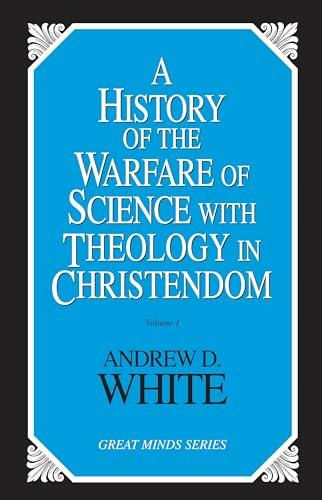

The book was referenced as a source that propagated the myth that people in the Middle Ages thought the Earth was flat, and this myth was popularized to create a perceived conflict between religion and science.
In 1874. And Andrew Dixon-Whites, a history of the warfare of science with theology and Christendom in 1896. Atheists and agnostics championed the conflict thesis of their own purposes but historical...
— Episode: CLASSIC: Flat Earth Update
Episode: CLASSIC: Flat Earth Update
The book was referenced as a source that propagated the myth that people in the Middle Ages thought the Earth was flat, and this myth was popularized to create a perceived conflict between religion and science.
In 1874. And Andrew Dixon-Whites, a history of the warfare of science with theology and Christendom in 1896. Atheists and agnostics championed the conflict thesis of their own purposes but historical research gradually demonstrated that Draper and White had propagated more fantasy than fact in their efforts to prove that science and religion are locked in internal conflict.
The myth that people in the Middle Ages thought the earth was flat appears to date from the 17th century as part of the campaign by Protestants against Catholic teaching. But it gained currency in the 19th century thanks to inaccurate histories such as John William Draper's History of the Conflict between Religion and Science, and Andrew Dixon-Whites, a history of the warfare of science with theology in Christendom.