
Podcast
Timcast IRL
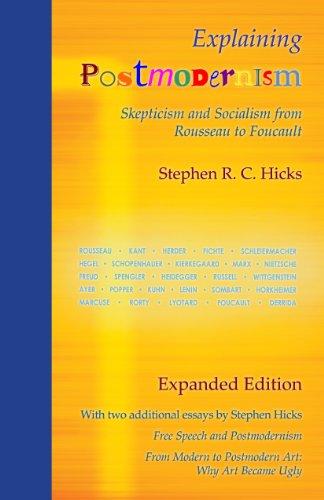
Stephen Hicks's book "Explaining Postmodernism" was recommended as a starting point to understand the left in the United States. The speaker implied that Hicks's book provides insights into the current state of the left's ideology.
I think that you should read Explaining Postmodernism by Stephen Hicks.
— Episode: Timcast IRL #968 US SCRAMBLES JETS As AN...
Episode: Timcast IRL #968 US SCRAMBLES JETS As ANOTHER BALL...
Stephen Hicks's book "Explaining Postmodernism" was recommended as a starting point to understand the left in the United States. The speaker implied that Hicks's book provides insights into the current state of the left's ideology.
I think that you should read Explaining Postmodernism by Stephen Hicks.
Episode: Timcast IRL #829 Biden DIRECTLY Implicated By Devo...
The book discussed how the left doesn't have the same kind of foundation that the right does, focusing on the differences between liberalism and authoritarianism. The speaker mentioned that the left doesn't have the same understanding of truth or reality as the right, and that this difference can lead to a lack of common ground.
I was listening to uh this book called this audiobook called explaining postmodernism by steven hicks and one of the things that he talks about is the way that the way that the left doesn't have the same kind of foundation that the right does and it's about you know liberalism versus authoritarianism and you're not going to be able to find common ground with people that have a fundamental different understanding of what the truth is or what reality is and and if there is no truth then it's fine to use ad hominems and call everybody nazis and stuff and we're seeing the effects of that now it's it's been 20 or 30 years to the about 30 or 40 years now actually that the left has called everybody on the right a nazi and every president's a nazi and always goes to the absolute worst where you know there's a lot of people in america now that aren't unfortunately that are not so afraid of the word of being called a racist anymore you know they're just like well you call everybody that you call everybody nazi you call everybody so it doesn't matter and you know that's something that we have to deal with and I don't I don't see how we can deal with with the the struggles that we're having as a country if if we can't even agree on what the philosophy that the united states is is founded on.