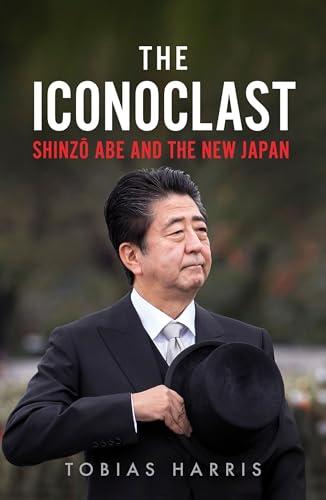
It was discussed by a guest on the show, who is also the author, and summarised Abe's political career and influence on Japan's political landscape and his legacy.
He was assassinated sadly over the weekend in Japan.
— Episode: Stories of Week 7/10: Abortion Response,...
Episode: Stories of Week 7/10: Abortion Response, Biden Pol...
It was discussed by a guest on the show, who is also the author, and summarised Abe's political career and influence on Japan's political landscape and his legacy.
He was assassinated sadly over the weekend in Japan.
In terms of world politics, in terms of Japanese leadership.
He was a state builder. Abe looked at the long arc of Japanese history both up until the time he entered politics but then also looking ahead to the future and wanted a strong top-down centralized government in a way that Japan, the Japanese government hadn't been after 1945, that was going to be able to have a proper national security establishment that would be able to respond to crises effectively that would really be able to meet the challenges that Japan was going to face in the coming decades.
He was persistent about it. It was something that he always made clear.
I think of all the major U.S. allies, Japan is the one which people probably know the least about here in America, but he still had a deep amount of affection, at least amongst the U.S. elite.
Episode: 7/11/22: Biden's Abortion Response, Elon vs Twitte...
It was discussed that Shinzo Abe was a towering figure in Japanese politics who reshaped the country's national security and defense posture, and his legacy is expected to continue.
I mean there's been no Japanese figure probably for for a generation or two who's loomed as large as he has.
Abe was a state builder. Abe looked at the long arc of Japanese history both up until the time he entered politics but then also looking ahead to the future and wanted a a ability strong top down centralized government in a way that Japanese Japanese government hasn't been hadn't been after 1945.
He was very clear about this, he was persistent about it, it was something that he always made clear.
He very much saw education in fact you look at the book he wrote back in 2006 which I really I mean really lays out his philosophy and his way of thinking quite clearly.
Of all the major U.S. allies, Japan is the one which people probably know the least about here in America.
Episode: 7/11/22: Biden's Abortion Response, Elon vs Twitte...
It was described as a biography of Shinzo Abe, a towering figure in Japanese politics, whose legacy was discussed following his assassination. His influence on the country's direction and national security was highlighted.
I mean there's been no Japanese figure probably for for a generation or two who's loomed as large as he has and you know ever since he entered Japanese politics in the early 1990s you know almost through force of will completely changed the direction I think of Japanese politics of the Japanese state was just a tremendously influential figure for a very long time.
He was a state builder. Abe looked at the long arc of Japanese history uh both up until the time he entered politics but then also looking ahead to the future and wanted a a ability strong top down centralized government in a way that Japanese Japanese government hasn't been uh hadn't been after 1945 that was going to be able to have a proper national security establishment that would be able to respond to crises effectively that would really be able to meet the challenges that Japan was going to face in the coming decades.
He very much saw education in fact you look at the book he wrote back in 2006 which I really I mean really lays out his philosophy and his way of thinking quite clearly uh you know education to him was also part of state building.
I personally I I don't think you need to downplay historical atrocities to make people feel proud of your country and I think lots of I think frankly lots of Japanese people felt proud of what was built after 1945 and the country that Japan came to be.
Of all the major U.S. allies Japan is the one which people probably know the least about here in America but he still had a deep amount of affection at least amongst the U.S. elite.