
Podcast
Stuff You Should Know
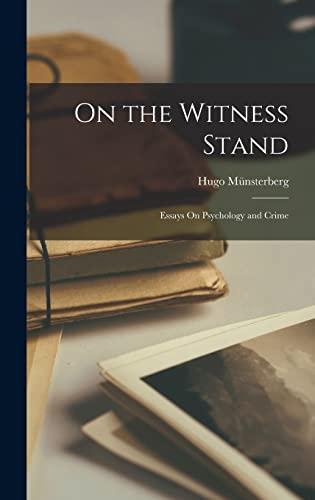
It was written by Hugo Munsterberg in 1908 and explored the fallibility of human memory, especially in the context of courtroom testimonies.
He wrote a book called On the Witness Stand in 1908 and he's known still today as the father of applied psychology.
— Episode: How Eyewitness Testimony Works(?)
Episode: How Eyewitness Testimony Works(?)
It was written by Hugo Munsterberg in 1908 and explored the fallibility of human memory, especially in the context of courtroom testimonies.
He wrote a book called On the Witness Stand in 1908 and he's known still today as the father of applied psychology.
Episode: How Eyewitness Testimony Works(?)
It was written in 1908 by a psychologist who helped advance the field of applied psychology. He argued against the idea that human memory was like a video recording and showed through experiments that memories are unreliable.
He wrote a book called On the Witness Stand in 1908 and he's known still today as the father of applied psychology.
He was a psychologist who said hey here's how psychology can help you in your day to day life especially if your day to day life is that you're being convicted of a crime based on eyewitness testimony.
And he basically showed through a lot of experiments and exercises when he was a lecturer at Harvard that memory was definitely not essentially just like a film strip or a videotape or for today's kids an MP4 file.
Episode: How Eyewitness Testimony Works(?)
It was written in 1908 and discussed the fallibility of human memory, particularly in legal settings, and was considered foundational in the field of applied psychology.
He wrote a book called On the Witness Stand in 1908 and he's known still today as the father of applied psychology.