Podcast
Freakonomics Radio
Across four episodes, the author introduced the book as an examination of how household technologies, from the open hearth to the microwave, paradoxically increased women's labor rather than reducing it. She explained that her original assumption—that electrification would free women for work—was disproven, highlighting the ironic impact of these innovations. The discussion presented the title as a compelling analysis of gendered labor dynamics and was treated as a noteworthy contribution.
Episode: In Praise of Maintenance (Rebroadcast)
It was mentioned as a book by Ruth Cowan where she explores how household technologies meant to reduce women's labor often increased it instead.
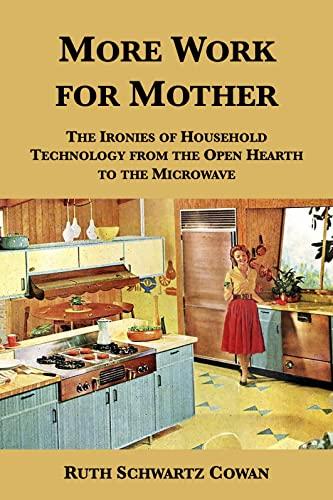
The name of my book is More Work for Mother, the ironies of household technology from the open hearth to the microwave.
Episode: 263. In Praise of Maintenance
It was discussed as the author's work exploring how household technology, intended to reduce women's labor, ironically increased it.
The name of my book is More Work for Mother, the Ironies of Household Technology from the Open Hearth to the Microwave.
Episode: EXTRA: In Praise of Maintenance (Update)
It was mentioned as a book that details the ironies of household technology, from the open hearth to the microwave, and that technological change in the household had been assumed to reduce women's labor, but this was later proven false.
The name of my book is More Work for Mother, the Ironies of Household Technology from the open hearth to the microwave.
I started out with the assumption that technological change in the household, mainly the electrification of households, had reduced women's labor so much that they could enter the workforce, married women's labor, and entered the workforce. And it took me about three years to discover that I was wrong.
Episode: EXTRA: In Praise of Maintenance (Update)
It was mentioned as a book exploring the impact of household technology on women's labor, revealing that innovations intended to reduce workload often resulted in increased labor instead.
The name of my book is More Work for Mother, the Ironies of Household Technology from the open hearth to the microwave.
I started out with the assumption that technological change in the household, mainly the electrification of households, had reduced women's labor so much that they could enter the workforce, married women's labor, and entered the workforce. And it took me about three years to discover that I was wrong.