Podcast
Freakonomics Radio
It was discussed in detail throughout the episode, including how Bren Smith's life experiences and challenges led him to develop regenerative ocean farming, especially using kelp. It highlighted his struggles with the conventional aquaculture industry and the benefits of kelp for climate change.
Kelp replenishes ecosystems rather than depleting them. It helps mitigate climate change, earning the moniker sequoia of the sea. It requires zero inputs, no feed, no fresh water, no fertilizers.
— Episode: 467. Is the Future of Farming in the Oce...
Episode: 467. Is the Future of Farming in the Ocean?
It was discussed in detail throughout the episode, including how Bren Smith's life experiences and challenges led him to develop regenerative ocean farming, especially using kelp. It highlighted his struggles with the conventional aquaculture industry and the benefits of kelp for climate change.
Kelp replenishes ecosystems rather than depleting them. It helps mitigate climate change, earning the moniker sequoia of the sea. It requires zero inputs, no feed, no fresh water, no fertilizers.
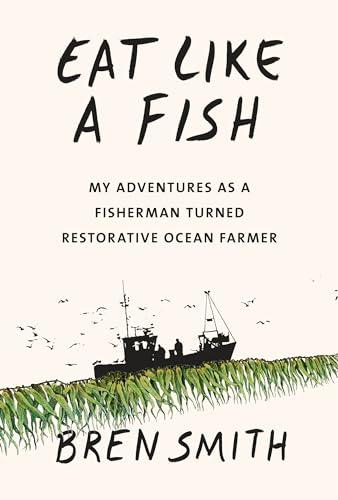
As I mentioned, the title of Smith's book is Eat Like a Fish. The subtitle? My Adventures Farming the Ocean to Fight Climate Change.
Mother Nature abhors monoculture. Stuff any animal cheek to jowl in overly crowded pens and the ocean will fight back with rampant disease. It's pretty simple.
With the new Thimble Island leases available, I decided to remake myself as an oysterman. By 2014, I had grown a blue thumb and learned to read my waters in new ways.
Native seaweeds contain more vitamin C than orange juice, more calcium than milk, and more protein than soybeans. Those on the hunt for omega-3s are often surprised to learn that fish don't create these heart-healthy nutrients by themselves. They consume them. By eating the plants fish eat, we get the same benefits while reducing pressure on fish stocks. So it's high time we eat like fish.