Podcast
Freakonomics Radio
It explored China's economic boom alongside high levels of corruption, suggesting that different government structures lead to distinct styles of corruption, and that China's corruption was more sophisticated and evolved.
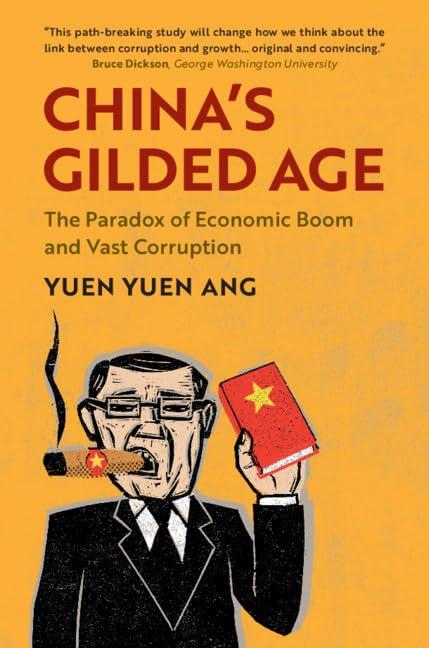
Yunyun Ang is a professor of political science at the University of Michigan. She recently published a book called China's Gilded Age, The Paradox of Economic Boom and Vast Corruption.
— Episode: Is the U.S. Really Less Corrupt Than Chi...
Episode: Is the U.S. Really Less Corrupt Than China — and H...
It explored China's economic boom alongside high levels of corruption, suggesting that different government structures lead to distinct styles of corruption, and that China's corruption was more sophisticated and evolved.
Yunyun Ang is a professor of political science at the University of Michigan. She recently published a book called China's Gilded Age, The Paradox of Economic Boom and Vast Corruption.
We should understand the relationship between China and the U.S., not as a clash of civilizations, but as a clash of two Gilded Ages.
Ang's latest book is called China's Gilded Age.
I would like to think that he would agree with my use of the term China's Gilded Age, because I think that is exactly what he is dealing with.
If Yuen Yuen Ong really is, as she puts it, intellectually weird, well, she's my kind of weird. Once again, her book is called China's Gilded Age, and she is a political scientist at the University of Michigan.
Episode: 481. Is the U.S. Really Less Corrupt Than China?
It argued that the US and China share similar levels of corruption, though the US has legalized and institutionalized it. It explored the evolution of corruption in capitalism, comparing China's current situation to the US's Gilded Age.
So my core argument is what we see in China today is basically what we would find in the U.S. in the last century.
There is, I would argue, a historical pattern in the evolution of corruption and capitalism. It's not true that corruption disappeared as countries became richer.
China is undergoing the Gilded Age 1.0, but the U.S., we could say it's the Gilded Age 2.0.
We should understand the relationship between China and the U.S. not as a clash of civilizations, but as a clash of two Gilded Ages.
Is one takeaway of your book and your scholarship generally that Americans should not feel too smug about the high level of Chinese corruption because we have our own forms of very high level corruption, except it's legal and we don't call it corruption?