Podcast
Freakonomics Radio
It was discussed in the context of understanding economic choices, institutions, and inequality, within a political and social framework. It was mentioned as a book the speaker wished he could have written as a teenager.
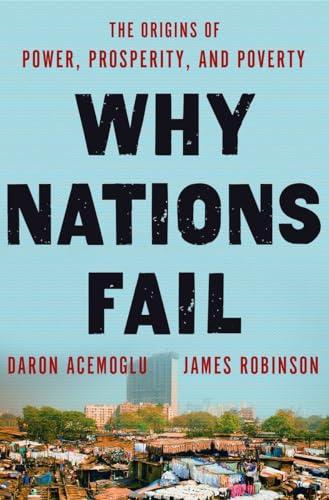
Why Nations Fail was published in 2012.
— Episode: 517. Are M.B.A.s to Blame for Wage Stagn...
Episode: 517. Are M.B.A.s to Blame for Wage Stagnation?
It was discussed in the context of understanding economic choices, institutions, and inequality, within a political and social framework. It was mentioned as a book the speaker wished he could have written as a teenager.
Why Nations Fail was published in 2012.
You cannot understand economic choices, economic institutions, economic incentives, inequality, innovation without thinking about the politics.
Episode: 421. How to Prevent Another Great Depression
It was mentioned as a book that discusses the origins of power, prosperity, and poverty, as well as the impact of institutions on national success and failure. Acemoglu used it to explain the historical impact of pandemics on societies, using the Black Death as an example.
The way I look at it, this crisis has been a confirmation of the critical role of institutions and how much U.S. institutions have suffered over the last few years.
We have completely failed in dealing with this crisis. And this is nothing but a colossal failure of our institutions.
Acemoglu points to South Korea, Taiwan, and Germany as places that have used their institutions well on both the public health and economic fronts.
In his book, Why Nations Fail, Acemoglu writes of another pandemic, the Black Death, the 14th century plague estimated to have wiped out more than half the population of Europe.