Podcast
StarTalk Radio
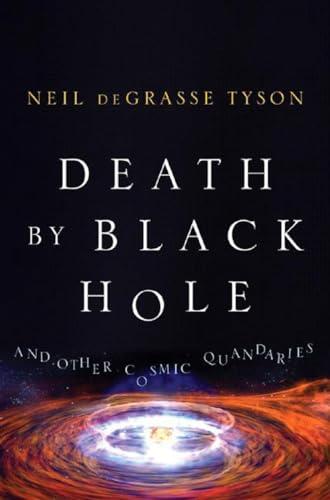
Neil deGrasse Tyson repeatedly referenced the book across many episodes, using its chapters to illustrate concepts such as the universality of physical laws, human senses, why objects are round, extreme densities, periodic‑table gaps, and existential cosmic threats. He and listeners highlighted it as a fan favorite and encouraged the audience to read it for clear, engaging explanations. The overall tone was enthusiastic and supportive, presenting the title as a recommended resource for curious listeners.
Episode: Cosmic Queries – Becoming Entangled
The book was written by Neil deGrasse Tyson, and it includes an entire chapter titled "On Earth As It Is In The Heavens" where he discusses the universality of physical laws, comparing physics on Earth to the rest of the universe. In this chapter, he argues that the laws of physics on Earth are indeed the same as everywhere else in the universe.
In fact, I have an entire essay titled, On Earth As It Is In The Heavens.
Oh, it's an entire, in fact, it's a chapter in my Death by Black Hole book.
I'm going to have to, I have in my hand, Death by Black Hole. And all I'm going to do is like read the first paragraph of that chapter.
Okay, it's chapter freaking two of this book. Okay. Okay, On Earth As It Is In The Heavens.
So now we're going to go to page 31. You ready? Go ahead. Until Isaac Newton wrote down the universal law of gravitation, there was little reason to presume that the laws of physics on Earth were the same as everywhere else in the universe.
Episode: Cosmic Queries – Flapjack Galaxy Grab Bag
He mentioned that the book "Death by Black Hole and other cosmic quandaries" contains a chapter called "Coming to Our Senses" which discusses the topic of human senses.
Okay, I guarantee it's in Death by Black Hole and other cosmic quandaries.
Episode: Cosmic Queries – Stoner Edition with Janna Levin
Neil deGrasse Tyson mentioned a book with this title by Janna Levin. It was clarified that this title refers to a chapter in a larger collection of essays on topics related to the universe.
Don't you have a book titled Death by Black Hole? I've always wanted to steal that title from you.
It's one, so that title is the title of one chapter in a book that goes a lot of different places.
Episode: Cosmic Queries: The Random Edition
It was mentioned as a fan favorite, and the topic of the periodic table and how scientists knew about gaps before discovery was discussed in reference to the book.
I've been reading your book, Death by Black Hole.
It's a fan favorite, Death by Black Hole.
Episode: Cosmic Queries – Science is Cool 4
Neil deGrasse Tyson mentioned writing a book about the relationship between governments and astronomers, suggesting it was relevant to a question about astronomy's economic value.
I wrote a whole book on this.
Episode: Extended Classic: Madame Saturn: A Conversation wi...
It was mentioned during a Q&A segment where a listener asked about the history of the periodic table and how scientists predicted undiscovered elements before they were found.
I've been reading your book Death by Black Hole.
Episode: Cosmic Queries – The Deep Part II
It was mentioned that the book contains an essay about why things are spherical, and that this essay was one of the author's top 10 essays.
In my death by black hole book.
And it might I don't think I put it in my So it's out there, okay, so should I spend time on that here and now or should you just go buy the book?
Warium Sedu Here's your answer death by black hole Amazon It's a whole chapter there on being round and being and it's I'll say in simple terms.
It's a whole chapter there on being round and being and it's I'll say in simple terms.
Episode: Cosmic Queries – The Deep
In the chapter on being dense, it was mentioned that the range of densities within our universe is staggering, from the densest objects to the vacuum of space.
The range of measured densities within our universe is staggeringly large.
one thimbleful [of neutrons in pulsars] would weigh about as much as a herd of 50 million elephants.
Episode: Cosmic Curiosities, with Paul Mecurio
The book's epigraph, 'The universe is under no obligation to make sense to you,' was mentioned, and Neil deGrasse Tyson discussed the ongoing nature of learning and understanding the cosmos.
The universe is under no obligation to make sense to you
Episode: Cosmic Queries: Mayan Apocalypse and Other Disaste...
Neil deGrasse Tyson mentioned his book 'Death by Black Hole' while discussing how Earth and the Universe have numerous ways to end life and how humanity might be its biggest threat.
In fact, in my book Death by Black Hole, I spend a whole chapter on this. All the ways the Universe wants to kill us.
Episode: Extended Classic – Cosmic Queries The Random Editi...
It was mentioned as a fan favorite, and the author discussed how scientists knew about gaps in the periodic table before discovering elements to fill them.
I've been reading your book, Death by Black Hole.
It's a fan favorite, Death by Black Hole.
Episode: Extended Classic: Madame Saturn: A Conversation wi...
It was mentioned by a listener, James, who also asked about the history of the periodic table of elements. The book was mentioned in the context of discussing black holes and spaghettification.
I've been reading your book Death by Black Hole.
Episode: Cosmic Queries: UFOs
It was mentioned that the concept of centrifugal force pushing people against the walls of a spinning spaceship was discussed in this book, including the issue of vomiting if spun too fast.
And I wrote about that in one of my books, I think in Death by Black Hole.
Episode: Cosmic Queries: Mayan Apocalypse and Other Disaste...
It was mentioned that the book contained a chapter on how the universe and Earth want to kill us, using various methods, such as asteroid impacts.
In fact, in my book Death by Black Hole, I spend a whole chapters on this.
All the way is the Universe wants to kill us.
All the way is Earth wants to kill us.