Podcast
Freakonomics Radio
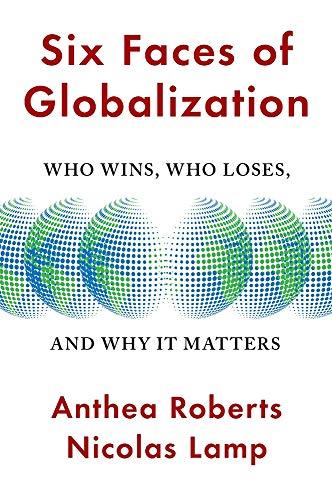
It was discussed as a book that explores six different narratives about economic globalization, arguing that individuals and countries tell stories about their economic lives and experiences.
Their main point is simple but also profound: we all tell stories about our economic lives. We as individuals and countries too, but we don't all tell the same story.
— Episode: 519. Has Globalization Failed?
Episode: 519. Has Globalization Failed?
It was discussed as a book that explores six different narratives about economic globalization, arguing that individuals and countries tell stories about their economic lives and experiences.
Their main point is simple but also profound: we all tell stories about our economic lives. We as individuals and countries too, but we don't all tell the same story.
In her book 'Six Faces of Globalization,' this is what Anthea Roberts calls the establishment narrative, the first of the six stories we tell ourselves.
That's the idea that economic globalization is a win for everyone. It's a rising tide that lifts all boats, or it's a growing of the pie so that everybody can have a greater slice.
Her book is titled 'Six Faces of Globalization: Who Wins, Who Loses, and Why It Matters.'
Apparently, the economists who presented it said an economist couldn't have written this book because we're told like to optimize something and what are we going to optimize?
Episode: 519. Has Globalization Failed?
It was discussed that the book presents six different narratives regarding globalization, including the establishment view and populist perspectives, and how they impact global economics and politics.
Their main point is simple but also profound: we all tell stories about our economic lives. We as individuals and countries too, but we don't all tell the same story.
In her book 'Six Faces of Globalization,' this is what Anthea Roberts calls the establishment narrative, the first of the six stories we tell ourselves.
That's the idea that economic globalization is a win for everyone. It's a rising tide that lifts all boats or it's a growing of the pie so that everybody can have a greater slice.
One critique of your book is by the economist Jason Furman, former head of the CEA, the Council of Economic Advisers in the Obama White House.
Her book is titled 'Six Faces of Globalization: Who Wins, Who Loses, and Why It Matters.' Her co-author is Nicholas Lamp.