Podcast
Strict Scrutiny
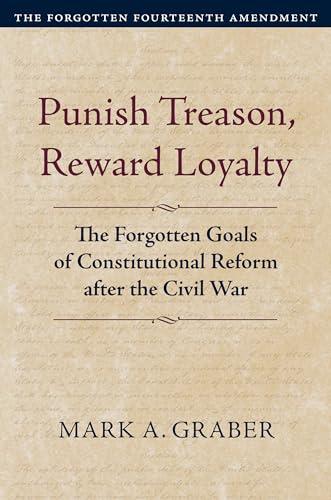
The speaker states that Mark A. Graber's book, "Punish Treason, Reward Loyalty", argues persuasively that the provisions in the 14th amendment were integral to reconstruction.
So again I think just thinking about what is an expedient and practical because I mean just as a practical matter I don't think there is any way that this court is going to allow the Colorado decision...
— Episode: Trump's Eligibility, Cash for Clarence,...
Episode: Trump's Eligibility, Cash for Clarence, and a Medi...
The speaker states that Mark A. Graber's book, "Punish Treason, Reward Loyalty", argues persuasively that the provisions in the 14th amendment were integral to reconstruction.
So again I think just thinking about what is an expedient and practical because I mean just as a practical matter I don't think there is any way that this court is going to allow the Colorado decision to stand because it would create a patchwork closure before the election and like they just don't want that. Predictively 100 percent. I also think in dear this is not my own thought but this is something that I'm cribbing from Darryl Miller of Duke Law School. This is kind of like a ticket to ride like this one good for one trip only like this issue is it Bush versus Gore. Well I mean I don't know that this question's going to come up over and over and over again and the future it seems like very specific very idiosyncratic for this particular candidate and you know the way you decide it for this particular candidate will have real repercussions for the incentives that other people have to use this provision going forward and I think they just want to cut it off at the knees. But also the enabling the enabling of the Dilea's point the enabling legislation as a basis for like taking an off ramp. Does that call into question like the actual possibility of other provisions the constitutions including of the four to the amendment? Like maybe it all requires enabling legislation. I mean that's a two-first right? Two-first! Where is the problem? Yeah yeah. I agree like with the predictive claim Melissa that that seems very likely and I also agree with Leon I think you agree to Melissa that it's a I don't think that's a good argument. So I find this all really hard not because that argument is hard or really on the merits like honestly I think that if you take the constitution seriously and that means like its words in context, its values, the consequences of different potential rulings like Trump should be ineligible like actually don't think it's hard on the merits but I do think the kind of question of sort of constitutional politics are hard. I don't know what the court should do here. I just like I know how bothered I am by some of the arguments that I have heard made and there is this kind of general chorus that has been I think kind of bipartisan cross ideological which is just like the Supreme Court must decide this and practical. Practically exactly. It's like the uniformity argument is powerful that makes sense like a patchwork where ballots look totally different from the perspective of the major party candidate across the country seems intolerable. On the other hand right it just is so uncritically accepting of this notion that only the Supreme Court can decide the most important questions in our democracy. That's something that I feel like we have been working very hard to resist in the podcast and elsewhere for a long time and so like that as the kind of precondition to all those arguments that the court must swoop in, I think revives this notion of the Supreme Court as the ultimate and only eruditor of the meaning of the constitution and even if that might practically be the case here like I don't want to uncritically accept that and so I think a lot of people no matter what they think the right answer is like all seem to agree that the court has to answer the question and I am really troubled by that assumption. Yes, I mean like me too because like ordinary politics are also happening right? Like people tried to convince the Republican Party to let Trump go with the January 6 hearings and opportunities to disavow Trump and they are still happening now and like I'm also concerned about giving the court and courts outside's role in our democracy but at least some of these cases like May and eros in the context of another institution and official concluding Trump is disqualified so courts like hypothetically could say our roles just to decide whether that determination falls within the bounds of some zone of reasonfulness of like constitutional democracy but of course that's not what they're going to do but I don't really hear you. Another sort of strain of commentary that has also just like driven me bonkers is this suggestion that you know people invoking the 14th Amendment Section 3 are like doing this in some sort of you know in the hopes that it will serve as this Deus Ex machina and like it'll be this easy out that will let us avoid the messy and difficult work of like politics and democracy and like that is I think wildly unfounded in part because of what you just alluded to like the messy and hard work of politics and electoral democracy happened in 2020 it resulted in the resounding defeat of an incumbent which is not a super common event historically and that defeated incumbent attempted to cling to power using multiple lawless means in ways that should disqualify him from future office holding like that's the argument I think it's a sound one and so if this is not about avoiding politics this is about you know meeting out constitutional consequences for an effort to completely usurp politics and democracy so I think that is that argument gets basically exactly backwards. Yeah and if I could just say one thing about Griffins case which is the case Melissa that you noted that the justice is like might rely on to say that enabling legislation is required to enforce Section 3 that was as you said a case that a Supreme Court Justice sitting as a circuit judge decided but the case is pretty thin because a specific issue in the case was basically whether to invalidate all of the acts of these provisional governments set up in the former Confederacy and that's a very different question than deciding X-ANT whether someone is qualified to run for office versus whether you are going to say actually this government that's been doing all of these things to set things up in the wake of the civil war we're actually going to say everything they did is unlawful right there are doctrines like de facto officer and whatnot that basically say even if someone e is might be like a legally appointed or whatnot you still can invalidate everything they do so the idea that that case resolves it also like is not exactly the firm support the Supreme Court might suggest it is. And that's the last part is I think really important because I think a lot of the people who have been harping on and on about Griffins case are taking a very unnewanced view of it and I think the courts likely to parot back that very unnewanced view.
