Podcast
Behind the Bastards
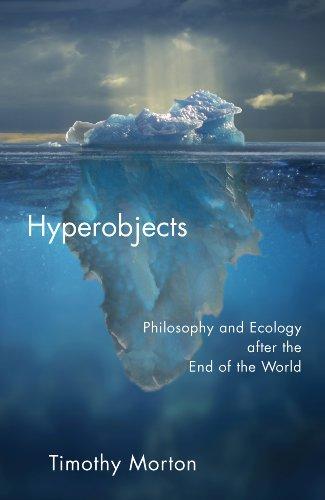
The author recommended this book to listeners interested in learning more about hyperobjects. It was described as an academic read, but not too bad, and a good place to start for those looking to explore this concept further.
Quoting from Morton's book, Hyperobjects, The Philosophy and Ecology After the End of the World, quote, Consider raindrops. You can feel them on your head, but you can't perceive the actual raindrop i...
— Episode: It Could Happen Here Weekly 18
Episode: It Could Happen Here Weekly 18
The author recommended this book to listeners interested in learning more about hyperobjects. It was described as an academic read, but not too bad, and a good place to start for those looking to explore this concept further.
Quoting from Morton's book, Hyperobjects, The Philosophy and Ecology After the End of the World, quote, Consider raindrops. You can feel them on your head, but you can't perceive the actual raindrop in itself. You can only ever perceive your particular anthropomorphic translation of the raindrops. Isn't this similar to the rift between weather, which I can feel falling on my head, and global climate? Not the older idea of local patterns of weather, but the entire system. I can think of and compute climate in this sense, but I can't directly see or touch it. The gap between the phenomenon and the thing yawns wide open, disturbing my sense of presence and being in the world.
Again, I'll quote from the book Hyperobjects, quote, Light itself is the most viscous thing of all, since nothing can surpass its speed. Radiation is Sartre's jar of honey par excellence, a luminous honey that reveals our bone structure as it seeps around us. Again, it's not a matter of making some suicidal leap into the honey, but discovering that we are already inside it. This is it, folks! This is the ecological interconnectedness! Come in and join the fun! But I see that you're already here. Unquote.
I would recommend picking it up if you want to learn more about these things.