Podcast
Behind the Bastards
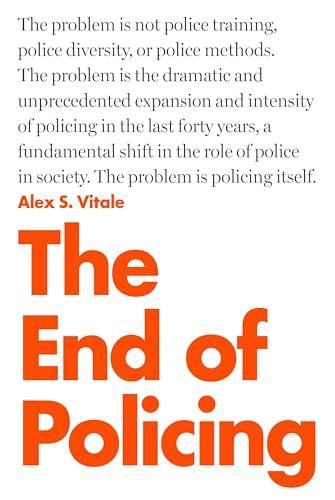
The title was repeatedly cited to back the hosts' arguments about policing's historical role in suppressing marginalized communities, from the Texas Rangers to modern broken‑windows tactics and the legacy of convict leasing. Both Robert Evans and Alex Vitale referenced it as a recent, essential read that provided data and analysis supporting their critiques of police power. The discussion highlighted the book's detailed exposure of how policing has been used as a tool of social control and oppression.
Episode: Behind the Police: How The Police Declared War On...
The author spoke about how the Texas Rangers were used to suppress the political and economic rights of Mexican Americans in the 60s and 70s. He also highlighted how the Rangers played a central role in subverting farm worker movements by shutting down meetings, intimidating supporters, and arresting and brutalizing picketers and union leaders.
In the 60s and 70s, local and state elites used rangers to suppress the political and economic rights of Mexican Americans and played a central role in subverting farm worker movements by shutting down meetings, intimidating supporters and arresting and brutalizing picketers and union leaders.
They were also frequently called in to intimidate Mexican Americans out of voting and local elections.
Many of the trainers moved in large numbers into law enforcement, including the Drug Enforcement Agency, FBI and numerous local and state police forces, bringing with them a more militarized vision of policing steeped in Cold War imperatives of suppressing social movements through counter intelligence, militarized riot suppression techniques and heavy handed crime control.
And he is very right when he says that a lot of data backs this argument up.
Episode: Behind the Police: How Police Unions Made Cops Eve...
It was mentioned as a recent read by Robert Evans, and it delves into the core of broken windows theory, emphasizing the idea that individuals possess latent destructive tendencies that are only kept in check through constant authority.
the emergence of this theory in 1982 is tied to a larger arc of urban neoconservative thinking going back to the 1960s.
Wilson's former mentor and collaborator, Edward Banfield, a close associate of neoliberal economist Milton Friedman at the University of Chicago, parented many of the ideas that came to make up the new conservative consensus on cities.
argued that liberals had unwittingly unleashed urban chaos by undermining the formal social control mechanisms that made city living possible by supporting the more radical demands of the later urban expressions of the civil rights movement.
They had so weakened the police teachers and other government forces of behavioral regulation that chaos came to reign.
broken windows policing is at root a deeply conservative attempt to shift the burden of responsibility for declining living conditions onto the poor themselves.
Episode: The History of American Police and the Ku Klux Kla...
It was highlighted as a must-read, detailing how vagrancy laws were used to force Black people into convict leasing and prison farms, effectively continuing slavery in a different form.
Anyone on the roads without proof of employment was quickly subjected to police action. Local police were the essential front door of the twin evils of convict leasing and prison farms.
Episode: Behind the Police: How The Police Declared War On...
The author was quoted in the episode talking about how the Texas Rangers were used to suppress the political and economic rights of Mexican Americans during the 1960s and 70s.
In the 60s and 70s, local and state elites used rangers to suppress the political and economic rights of Mexican Americans and played a central role in subverting farm worker movements by shutting down meetings, intimidating supporters and arresting and brutalizing picketers and union leaders. They were also frequently called in to intimidate Mexican Americans out of voting and local elections.
And he is very right when he says that a lot of data backs this argument up.
many of the trainers moved in large numbers into law enforcement, including the Drug Enforcement Agency, FBI and numerous local and state police forces, bringing with them a more militarized vision of policing steeped in Cold War imperatives of suppressing social movements through counter intelligence, militarized riot suppression techniques and heavy handed crime control.
Episode: Behind the Police: How Police Unions Made Cops Eve...
It highlighted the core idea behind broken windows theory, suggesting that people have inherent destructive tendencies that need constant policing and authority to control.
the emergence of this theory in 1982 is tied to a larger arc of urban neoconservative thinking going back to the 1960s.
Episode: The History of American Police and the Ku Klux Kla...
It was highlighted as a must-read book, and it was quoted as illustrating the connection between vagrancy laws, convict leasing, and the cruel justice system targeting free black people in the post-Civil War South.
Anyone on the roads without proof of employment was quickly subjected to police action. Local police were the essential front door of the twin evils of convict leasing and prison farms.
Local sheriffs would arrest free blacks on flimsy to non-existent evidence, then drive them into a cruel and inhuman justice system whose punishments often resulted in death.
Episode: America's War On Children
The book was referenced to support the claim that John DiLulio and his colleagues argued for incarcerating children for as long as possible, based on spurious evidence and ideologically-motivated assumptions that were inaccurate.
DeLulio and his colleagues argued that there was nothing to be done but to exclude such children from settings where they could harm others and ultimately to incarcerate them for as long as possible.
The US Department of Education found in a 2011-2012 survey of 72,000 schools that Black, Latino and special needs students were all disproportionately subjected to criminal justice actions.
In 2010, the Southern Poverty Law Center filed a class action lawsuit against the Birmingham, Alabama schools claiming they were systematically using excessive force.
Episode: Behind the Police: How The Police Declared War On...
In the 1960s and 70s, the Texas Rangers were used to suppress the political and economic rights of Mexican Americans and played a central role in subverting farm worker movements by shutting down meetings, intimidating supporters and arresting and brutalizing picketers and union leaders.
In the 60s and 70s, local and state elites used rangers to suppress the political and economic rights of Mexican Americans and played a central role in subverting farm worker movements by shutting down meetings, intimidating supporters and arresting and brutalizing picketers and union leaders. They were also frequently called in to intimidate Mexican Americans out of voting and local elections.
And he is very right when he says that a lot of data backs this argument up.
many of the trainers moved in large numbers into law enforcement, including the Drug Enforcement Agency, FBI and numerous local and state police forces, bringing with them a more militarized vision of policing steeped in Cold War imperatives of suppressing social movements through counter intelligence, militarized riot suppression techniques and heavy handed crime control.
The police are the most sensitive point of contact between the government and people close to the focal points of unrest and more acceptable than the army as keepers of order over long periods of time.
Episode: Behind the Police: How Police Unions Made Cops Eve...
Published this year, it explored the core of broken windows theory and how it relates to the latent destructive traits in people that are unleashed without constant pressure from authority to conform and behave.
the emergence of this theory in 1982 is tied to a larger arc of urban neoconservative thinking going back to the 1960s.
Wilson's former mentor and collaborator, Edward Banfield, a close associate of neoliberal economist Milton Friedman at the University of Chicago, parented many of the ideas that came to make up the new conservative consensus on cities.
argued that liberals had unwittingly unleashed urban chaos by undermining the formal social control mechanisms that made city living possible by supporting the more radical demands of the later urban expressions of the civil rights movement.
They had so weakened the police teachers and other government forces of behavioral regulation that chaos came to reign.
broken windows policing is at root a deeply conservative attempt to shift the burden of responsibility for declining living conditions onto the poor themselves.
Episode: The History of American Police and the Ku Klux Kla...
It was discussed as a crucial read, highlighting the link between slave patrols and the formation of police departments, and how they were used as a tool to oppress Black communities.
Anyone on the roads without proof of employment was quickly subjected to police action. Local police were the essential front door of the twin evils of convict leasing and prison farms.
Local sheriffs would arrest free blacks on flimsy to non-existent evidence, then drive them into a cruel and inhuman justice system whose punishments often resulted in death.