Podcast
Behind the Bastards
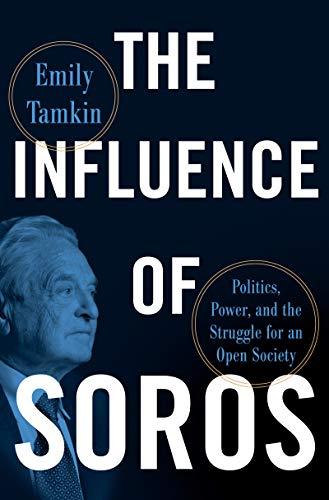
The book was mentioned as a source for Soros's early career as a financial whiz, his predictions of the Plaza Accords, and his later involvement in currency speculation.
He's talking about - this guy named Karl Popper who is like a philosopher of science who also wrote this book called The Open Society that we'll talk about next episode more. Popper's philosophy made...
— Episode: It Could Happen Here Weekly 85
Episode: It Could Happen Here Weekly 85
The book was mentioned as a source for Soros's early career as a financial whiz, his predictions of the Plaza Accords, and his later involvement in currency speculation.
He's talking about - this guy named Karl Popper who is like a philosopher of science who also wrote this book called The Open Society that we'll talk about next episode more. Popper's philosophy made me more sensitive to the role of misconceptions in financial markets, Soros said decades later.
People believe that markets don't lie and should be trusted but that isn't true, Soros knew. Markets react to humans and humans are fallible.
Instead of looking at the money being made or as Sebastian Malaby put it in More Money Than God, his book on the history of hedge funds, the psychology that drove investors' appetites, Soros looked at how one impacted the other, predicting that each would drive the other forward until the trust were so completely overvalued that a crash was inevitable.
It was a debate we had, Jones told me. We'd gone to work in Asia and here you are taking large-scale short positions in countries with institutional fragility. Going for the jugular in the United Kingdom was one thing. Doing the same in Thailand was another.
The Bank of England would surely recover. Thailand was a developing economy and it was unclear what impact outside investors could have. Soros has justified speculation with the idea that it could serve as a kind of warning to governments.