Podcast
Behind the Bastards
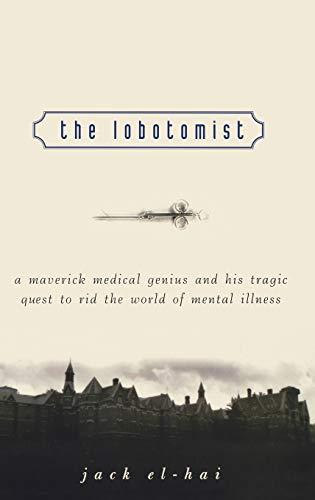
The book was referenced multiple times throughout the podcast, providing a detailed account of Walter Freeman's lobotomy practices and the consequences of his actions.
I'm going to quote now from the book the lobotomist.
— Episode: Part Two: The Bastard Who Invented The L...
Episode: Part Two: The Bastard Who Invented The Lobotomy
The book was referenced multiple times throughout the podcast, providing a detailed account of Walter Freeman's lobotomy practices and the consequences of his actions.
I'm going to quote now from the book the lobotomist.
In 1948 Patricia Darian a student nurse at the University of Virginia in Charlottesville watched Freeman perform a transorbital lobotomy at a nearby state hospital.
Freeman selected the patients for operation she reported by twisting their joints to determine their flexibility not by reading or taking histories after a special lunch in honor of the occasion of his visit he occupied a conference room and had each patient shocked and photographed.
When all was ready he would plunge the leukotome in Darian noted. He wore no gown mask or gloves afterwards he would sit the patients up and have them walked out of the room.
He was very proud of the fact that the people walked in and walked out none had to be carried although one or two of them sagged badly on the way out she remembered.
Episode: Part One: The Bastard Who Invented The Lobotomy
It was discussed extensively throughout the episode, including details of Walter Freeman's life and his work on lobotomies. It was mentioned as a biography of Walter Freeman.
The wonderful biography of Walter, The Lobotomist, notes that he also nursed a lifelong fear of horses but never knew why.
Now, I'm gonna quote now from Jack El-Hai who wrote the lobotomist and also wrote this piece for The Washington Post.
To him, the intoxicating thing about psychosurgery, Moniz's coin term for psychiatric surgery, was its potential to sever the links between the over excited emotions of an unhealthy thalamus and the behavioral functions of the prefrontal lobes of the brain.
If it worked, the destruction of these nerve fibers would prevent the thalamus from poisoning patients' thinking.
He absorbed the details of Moniz's work and, with neurosurgeon Watts, became figuring out how to adapt the Portuguese physician's techniques.
Episode: Part Two: The Bastard Who Invented The Lobotomy
The book was referenced throughout the episode, particularly regarding the content of Freeman's actions and his lobotomy practices. It was mentioned as a good source of information on the topic and the host provided several quotes from it.
In 1948 Patricia Darian a student nurse at the University of Virginia in Charlottesville watched Freeman perform a transorbital lobotomy at a nearby state hospital.
Freeman selected the patients for operation she reported by twisting their joints to determine their flexibility not by reading or taking histories after a special lunch in honor of the occasion of his visit he occupied a conference room and had each patient shocked and photographed.
When all was ready he would plunge the leukotome in Darian noted. He wore no gown mask or gloves afterwards he would sit the patients up and have them walked out of the room.
He was very proud of the fact that the people walked in and walked out none had to be carried although one or two of them sagged badly on the way out she remembered.
In his classified report titled, Some Areas of Psychiatric Interest, Loefflin commented that the procedure would be adaptable to intelligence work and noted that he watched Dr. Freeman perform 22 transorbital lobotomies with an average of about 6 minutes per operation.
Episode: Part One: The Bastard Who Invented The Lobotomy
It was referenced several times throughout the episode as a source of information about Walter Freeman, detailing his life and work with lobotomies.
The wonderful biography of Walter, The Lobotomist, notes that he also nursed a lifelong fear of horses but never knew why.
To him, the intoxicating thing about psychosurgery, Moniz's coin term for psychiatric surgery, was its potential to sever the links between the over excited emotions of an unhealthy thalamus and the behavioral functions of the prefrontal lobes of the brain.
If it worked, the destruction of these nerve fibers would prevent the thalamus from poisoning patients' thinking.
He absorbed the details of Moniz's work and, with neurosurgeon Watts, became figuring out how to adapt the Portuguese physician's techniques.
Freeman and Watts used brains from the hospital morgue to practice the coring of sections of the prefrontal lobes with a leukotome, which is the device they used for that.
Episode: Part Two: The Bastard Who Invented The Lobotomy
The book was referenced multiple times during the discussion of Walter Freeman and his lobotomies. It was used as a source to understand the context and details of his practices and was mentioned in quotes read by the host.
In 1948, Patricia Darian, a student nurse at the University of Virginia in Charlottesville, watched Freeman perform a transorbital lobotomy at a nearby state hospital.
Freeman selected the patients for operation she reported by twisting their joints to determine their flexibility not by reading or taking histories after a special lunch in honor of the occasion of his visit he occupied a conference room and had each patient shocked and photographed.
When all was ready he would plunge the leukotome in Darian noted. He wore no gown mask or gloves afterwards he would sit the patients up and have them walked out of the room.
He was very proud of the fact that the people walked in and walked out none had to be carried although one or two of them sagged badly on the way out she remembered.
In his classified report titled, Some Areas of Psychiatric Interest, Loefflin commented that the procedure would be adaptable to intelligence work and noted that he watched Dr. Freeman perform 22 transorbital lobotomies with an average of about 6 minutes per operation.
Episode: Part One: The Bastard Who Invented The Lobotomy
It was referenced multiple times as a biography of Walter Freeman and his work, including detailing his early life, career, and the development and implementation of lobotomies.
To him, the intoxicating thing about psychosurgery, Moniz's coin term for psychiatric surgery, was its potential to sever the links between the over excited emotions of an unhealthy thalamus and the behavioral functions of the prefrontal lobes of the brain.
If it worked, the destruction of these nerve fibers would prevent the thalamus from poisoning patients' thinking.
He absorbed the details of Moniz's work and, with neurosurgeon Watts, became figuring out how to adapt the Portuguese physician's techniques.
The authors regret to announce that they have been unable to reach an agreement on the subject of transorbital lobotomy.
Freeman believes that he has proved the method to make a person as effective and safe to entrust to the psychiatrist.
Episode: Part Two: The Bastard Who Invented The Lobotomy
The book was referenced as a source for the episode. It was discussed numerous times and cited for multiple quotes related to Walter Freeman and his lobotomies.
I'm going to quote now from the book the lobotomist.
In 1948 Patricia Darian a student nurse at the University of Virginia in Charlottesville watched Freeman perform a transorbital lobotomy at a nearby state hospital.
Freeman selected the patients for operation she reported by twisting their joints to determine their flexibility not by reading or taking histories after a special lunch in honor of the occasion of his visit he occupied a conference room and had each patient shocked and photographed.
When all was ready he would plunge the leukotome in Darian noted. He wore no gown mask or gloves afterwards he would sit the patients up and have them walked out of the room.
He was very proud of the fact that the people walked in and walked out none had to be carried although one or two of them sagged badly on the way out she remembered.
Episode: Part One: The Bastard Who Invented The Lobotomy
It was used as a source throughout the episode and discussed Freeman's fascination with accessing the brain and his surgical techniques. It was also mentioned in regards to a passage that described his father's lack of interest in his work.
To him, the intoxicating thing about psychosurgery, Moniz's coin term for psychiatric surgery, was its potential to sever the links between the over excited emotions of an unhealthy thalamus and the behavioral functions of the prefrontal lobes of the brain.
If it worked, the destruction of these nerve fibers would prevent the thalamus from poisoning patients' thinking.
He absorbed the details of Moniz's work and, with neurosurgeon Watts, became figuring out how to adapt the Portuguese physician's techniques.
Freeman and Watts used brains from the hospital morgue to practice the coring of sections of the prefrontal lobes with a leukotome, which is the device they used for that.
The authors regret to announce that they have been unable to reach an agreement on the subject of transorbital lobotomy.