Podcast
Behind the Bastards
It was highly recommended for its compulsively readable nature and critical perspective on D'Annunzio's life. It was described as one of the best biographies ever read.
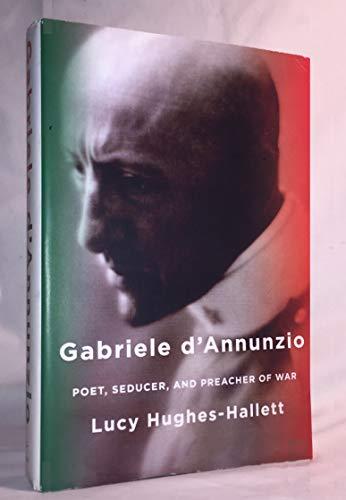
as interesting as I find this guy, his biography, Gabriel Denoncio, a poet, seducer and the preacher of war by Lucy Hughes Hallett, I really recommend.
— Episode: Part Two: The Man Who Invented Fascism
Episode: Part Two: The Man Who Invented Fascism
It was highly recommended for its compulsively readable nature and critical perspective on D'Annunzio's life. It was described as one of the best biographies ever read.
as interesting as I find this guy, his biography, Gabriel Denoncio, a poet, seducer and the preacher of war by Lucy Hughes Hallett, I really recommend.
Hughes Hallett is a fantastic writer and very critical eye in a really interesting way.
I really appreciate her perspective on this guy so I very much recommend that book.
I mean all the quotes you've read from it are amazing.
It's fantastic. And he is just absolutely a fascinating piece of shit.
Episode: Part One: The Man Who Invented Fascism
It is a biography about Gabriele D'Annunzio, the author's writing emphasizes D'Annunzio's talent as a writer while concurrently exploring the dark and problematic sides of his personality.
Funerals, the Biaire followed by a long lines of hooded mourners. Their faces covered all by but a slit for the eyes or processions of girls and sacrificial white on the way to their first communion provide the town's main spectacles.
Many of the stories Denonzio related about his childhood concerned dying animals. There was the death of his little Sardinian horse, a bay with a white muzzle named Aquilino and the death of his little Sardinian horse, a bay with a white muzzle named Aquilino. And the death of his little Sardinian horse, a bay with a white muzzle named Aquilino whom he would feed with apples and sugar lumps in the peace of the nighttime stable.
There was the quail the farm manager gave him in a cage made of twigs. Half a century later, Denonzio could still recall how the tiny creature had dashed itself against its makeshift bars, gashing its head until the bone showed.
On killing days, the howling of stuck pigs and their blood spurting into basins so appalled him that he would hide in a corner, face to the wall, his hand over his contorted mouth. Life scared me as though it stalked me with a pig-sticking knife in hand.
After the mass of the little Sardinian horse, he sobbed all night.
He luxuriated in the idea of her unhappiness. He even told her how much you would like to see her corpse.
He loved it that she was deathly pale like the blessed damoselle, the dead girl of her city's famous poem and painting, but he would have preferred her even paler.
I want you even paler, I want you dead.
He's an emotional manipulator like and he's a fundamentally abusive person.
In the political rhetoric and poetry of the period civilian existence is gray, dim, morally compromised and physically grubby. The battlefield by contrast is bright a glitter with weapons and flashing with joy above all it is clean.
Italy was no longer a pension defamilie of museum but a living nation he declared in one interventionalist demagogic speech to general acclaim.
The prospect of mass deaths thrilled him.
He was fast developing a brilliantly manipulative oratorical technique.
He allowed his public no break in his contrivances of their hysteria.
Hear me, he cried, listen to me, understand me.
The sheer rage he worked these crowds into eventually made any outcome but war basically impossible.
He attacked the advocates of peace in vitriolic terms.
The very air of Rome stank with their treachery.
Those who still hung back from war were traitors, assassins of the patria, Italy's executioners.
He called upon the Roman mob to take the law into their own hands.
He urged his listeners to attack the appeasers who licked the boots on sweaty Prussian feet.
He called for stonings and arson.
I tell you there is treason here in Rome.
We were being sold like a herd of diseased cattle.
He urged the people to hunt down anti-war deputies, form squads, 'squadra' was one of the many words the fascists would pick up from him.
And wait, seize them, capture them.
An observer reports that the applause when he paused was like a storm when he resumed to denounce Geoliti in ever more vituperative terms, that diabolical old blubber-lipped hangman, the storm was transformed into a cyclone.
He was high on his own eloquence, on the frenzy of the crowds he flattered and inflamed and on the prospect of blood.
52 years old, he extolled the ruthless purity of youth.
A poet whose life's work had been the threading together of obscure and beautiful words, he inveighed against verbiage and called for action, cruel if need be, and unambiguous.
It is not the time for speaking but for doing.
He ended by leading the crowd in an anthem, beating time with his little white hands while the people below bellowed out through a frame, 'Let us join the cohort, we are ready to die, Italy has called'.
He was the rage. A woman who had not slept with him made herself ridiculed.
Episode: Part Two: The Man Who Invented Fascism
It was highly recommended for its compulsively readable style and critical perspective on D'Annunzio's life. The book's quotes were described as amazing, offering a deep dive into the life of a complex and fascinating historical figure.
as interesting as I find this guy, his biography, Gabriel Denoncio, a poet, seducer and the preacher of war by Lucy Hughes Hallett, I really recommend. It's one of the best biographies I've ever read. Like very compulsively readable.
Hughes Hallett is a fantastic writer and very critical eye in a really interesting way. I really appreciate her perspective on this guy so I very much recommend that book.
Blessed are those who are now 20 years old, he said. He worshipped and envied their beauty and took enormous pleasure in the opportunities that war afforded him to live alongside them as companions and arms. Their deaths were marvelous to him.
I have a horror of sedentary work, of the pin, of the ink, of paper, of all those things now become so futile. A feverish desire for action takes me.
am I not the precursor of all that's good about fascism?
Episode: Part One: The Man Who Invented Fascism
It was quoted extensively in the podcast episode to provide insight into D'Annunzio's early life and writing style, focusing on his childhood memories and his visceral writing.
Funerals, the Biaire followed by a long lines of hooded mourners. Their faces covered all by but a slit for the eyes or processions of girls and sacrificial white on the way to their first communion provide the town's main spectacles.
Many of the stories Denonzio related about his childhood concerned dying animals. There was the death of his little Sardinian horse, a bay with a white muzzle named Aquilino and the death of his little Sardinian horse, a bay with a white muzzle named Aquilino.
and the death of his little Sardinian horse, a bay with a white muzzle named Aquilino whom he would feed with apples and sugar lumps in the peace of the nighttime stable.
There was the quail the farm manager gave him in a cage made of twigs. Half a century later, Denonzio could still recall how the tiny creature had dashed itself against its makeshift bars, gashing its head until the bone showed.
On killing days, the howling of stuck pigs and their blood spurting into basins so appalled him that he would hide in a corner, face to the wall, his hand over his contorted mouth. 'Life scared me as though it stalked me with a pig-sticking knife in hand.' After the mass of the little Sardinian horse, he sobbed all night.
Episode: Part Two: The Man Who Invented Fascism
It was highly recommended for its compulsively readable style and critical perspective on D'Annunzio's life. It was described as one of the best biographies ever read by one of the podcast hosts.
as interesting as I find this guy, his biography, Gabriel Denoncio, a poet, seducer and the preacher of war by Lucy Hughes Hallett, I really recommend.
Hughes Hallett is a fantastic writer and very critical eye in a really interesting way.
I really appreciate her perspective on this guy so I very much recommend that book.
I mean all the quotes you've read from it are amazing.
I really recommend the biography by Lucy Hughes, Howlett, Gabriel Denunzio, poet, seducer and preacher of war. It's fantastic.
Episode: Part One: The Man Who Invented Fascism
It was a biography of Gabrielle d'Annunzio, referenced throughout the episode, and offered a detailed account of his life and personality, along with insights into his childhood and writing.
Funerals, the Biaire followed by a long lines of hooded mourners. Their faces covered all by but a slit for the eyes or processions of girls and sacrificial white on the way to their first communion provide the town's main spectacles. Many of the stories Denonzio related about his childhood concerned dying animals.
There was the death of his little Sardinian horse, a bay with a white muzzle named Aquilino and the death of his little Sardinian horse, a bay with a white muzzle named Aquilino. And the death of his little Sardinian horse, a bay with a white muzzle named Aquilino whom he would feed with apples and sugar lumps in the peace of the nighttime stable.
There was the quail the farm manager gave him in a cage made of twigs. Half a century later, Denonzio could still recall how the tiny creature had dashed itself against its makeshift bars, gashing its head until the bone showed. On killing days, the howling of stuck pigs and their blood spurting into basins so appalled him that he would hide in a corner, face to the wall, his hand over his contorted mouth. Life scared me as though it stalked me with a pig-sticking knife in hand.
After the mass of the little Sardinian horse, he sobbed all night.
He luxuriated in the idea of her unhappiness he even told her how much you would like to see her corpse he loved it that she was deathly pale like the blessed damoselle the dead girl of her city's famous poem and painting but he would have preferred her even paler he told her that he would go around all the florists in the city and he would have carried her with assorted flowers to come and bury her beneath them yes to bury you I want to make you die he wrote to Tito Zucconi not as one might expect promising to cherish and protect Tito's daughter but announcing I and Elda cannot live long both he and Giselda were so far as we know in perfectly good health yet Denunzio wrote our cold bodies will fall to the earth to feed the flowers and we'll be swept away unconscious atoms.
Episode: Part Two: The Man Who Invented Fascism
It was highly recommended as one of the best biographies ever read, praised for its compulsively readable style and critical perspective on D'Annunzio's life.
as interesting as I find this guy, his biography, Gabriel Denoncio, a poet, seducer and the preacher of war by Lucy Hughes Hallett, I really recommend. It's one of the best biographies I've ever read. Like very compulsively readable.
Hughes Hallett is a fantastic writer and very critical eye in a really interesting way. I really appreciate her perspective on this guy so I very much recommend that book.
Blessed are those who are now 20 years old, he said. He worshipped and envied their beauty and took enormous pleasure in the opportunities that war afforded him to live alongside them as companions and arms. Their deaths were marvelous to him.
I have a horror of sedentary work, of the pin, of the ink, of paper, of all those things now become so futile. A feverish desire for action takes me.
You whose own spirit is so hardworking and so generous must understand me. He stressed his physical competence. He was not a man of letters as of the old type and skullcap and slippers. He was an adventurer.
Episode: Part One: The Man Who Invented Fascism
It was referenced as a biography of Gabriele D'Annunzio, with details about his early life and writing style being referenced and quoted from the book.
Funerals, the Biaire followed by a long lines of hooded mourners. Their faces covered all by but a slit for the eyes or processions of girls and sacrificial white on the way to their first communion provide the town's main spectacles.
Many of the stories Denonzio related about his childhood concerned dying animals. There was the death of his little Sardinian horse, a bay with a white muzzle named Aquilino and the death of his little Sardinian horse, a bay with a white muzzle named Aquilino. And the death of his little Sardinian horse, a bay with a white muzzle named Aquilino whom he would feed with apples and sugar lumps in the peace of the nighttime stable.
There was the quail the farm manager gave him in a cage made of twigs. Half a century later, Denonzio could still recall how the tiny creature had dashed itself against its makeshift bars, gashing its head until the bone showed. On killing days, the howling of stuck pigs and their blood spurting into basins so appalled him that he would hide in a corner, face to the wall, his hand over his contorted mouth. Life scared me as though it stalked me with a pig-sticking knife in hand.
After the mass of the little Sardinian horse, he sobbed all night.
In the political rhetoric and poetry of the period civilian existence is gray dim morally compromised and physically grubby the battlefield by contrast is bright a glitter with weapons and flashing with joy above all it is clean.