Podcast
Unexplainable
It was mentioned as a search tool and field guide, resulting from a decades-long effort to compile and analyze a vast number of lost person cases from around the world.
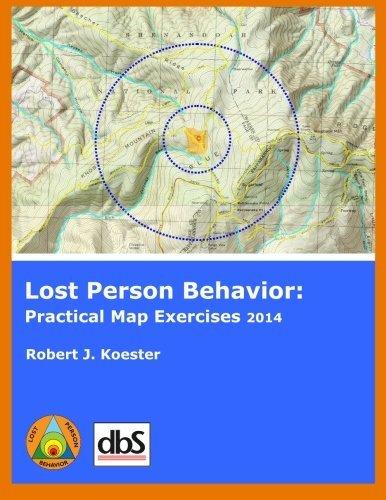
And that's what that Lost Person Behavior book by Bob Kester provides.
— Episode: You're lost in the wilderness. Now what?
Episode: You're lost in the wilderness. Now what?
It was mentioned as a search tool and field guide, resulting from a decades-long effort to compile and analyze a vast number of lost person cases from around the world.
And that's what that Lost Person Behavior book by Bob Kester provides.
Robert Kester has been in search and rescue for over 30 years. And he's most famous for a book called Lost Person Behavior.
The Lost Person Behavior book is a search tool, a field guide. But really, it's the front end of a database. It's the result of a decades-long effort to create and analyze a huge volume of lost person cases.
It's columns and rows and columns and rows of data. No other lost person database comes anywhere close to its scale.
If you flip through the Lost Person Behavior book, you'll find chapters for different kinds of people who get lost. So a hunter is going to behave differently than a hiker who's going to behave differently than a mushroom picker.
There's 41 categories of people in his book. And each one comes with a sort of archetype of how different kinds of people move. It comes with a checklist of steps to start looking for them. And it tells you what clues to look for.
So, for example, I like mushroom foraging. That's on page 178. Robert's book says I'm highly secretive about the areas I visit to keep my mushrooms hidden. I'll often go off trail, I'll jump from spot to spot without paying attention to the general area. And if I get lost, it's most likely because I have poor navigational skills.
But the book is also full of statistics. Like the chances a lost person is still alive after a certain number of hours. Or how often they're found near something like a river.
And the most useful details here are the average distances between where the person was last known to be and where they're found.
It's that probability of area I mentioned before. And these numbers can be pretty different depending on who you're trying to find.
So 75% of the time, a mushroom picker like me is found within four miles of their last known location. For a climber, it's two miles. For someone with Alzheimer's, about one.
By using the probabilities, you can create a heat map and say, here are more likely areas and here are less likely areas.
If you were to draw the probabilities on a map, you'd mark the point where the person was last seen and then draw four concentric circles around that point. So the smallest ring would represent the area where 25% of people were found in this database. Then you draw bigger and bigger rings until you have something like a bullseye on your map, helping you figure out where to concentrate your search.
It's going to be useful about 95% of the time. Beyond that, everything else is a statistical outlier and it's darn hard to plan for the statistical outliers.
Robert's book is used in search and rescue trainings all over the country. And every single one of the search and rescue volunteers I spoke to, from Alaska to Virginia to British Columbia, said they find it useful.
So did Paul. Going all the way back to when I first started doing search and rescue, I was looking for cookbooks, right? What's the standard operating procedure for a missing person? How do I do this thing? Preferably with a checklist because I'm stressed.
I thought it was really useful. It gave us guidance on roughly as the crow flies, how far away are people typically found based on different scenarios. So it provided the ability to take action, right? And that was really, really good.
Paul used this book on a lot of his searches. But after a few months, he started feeling like it had some major limitations.
You're looking at this giant map of Yosemite, where do we start? Right? And that book, that was my only kind of guide, right? And so I kind of found it useful to get started, but found it limiting in that we're overestimating this search area and we don't have the resources to search it.
And that was really what got me curious was, you know, we've got this whole park to work with, maybe even beyond. How do we focus our resources?
We have this lost person behavior book, but have we really taken the science as far as it could go?
When Robert started the lost person behavior database, he had to figure out how to analyze and parse all this information he'd collected from various federal departments, state agencies, local volunteer teams, police departments, basically anywhere he could get it.
The hope was somewhat biased to basically help myself. What information would help me run a search? I felt like as long as I kept it focused on what's useful to practitioners, then in the end not only was it going to help myself, but it was going to help other search planners.
There's a million ways to analyze a data set and parse out patterns and probabilities.
Robert decided to take a more human-centered approach. He landed on 41 categories for people, but only a handful for terrain and regional differences. That's what you see in his book.
Paul wanted to dig deeper, but the database that Robert made was private. It was proprietary. At the time, all you could do is get the book.
He didn't have the raw data. All he had were summary statistics like how far on average did a lost mushroom forager travel in a place like Yosemite that's classified as a temperate region.
But the coast of Spain is also temperate, and so are the Great Plains, and they don't feel at all like Yosemite.
We have this unique terrain environment. If you go missing in Yosemite Valley, you've got like a 3,000 to 4,000 foot toilet bowl to climb yourself out of, right? You've got this big huge terrain challenge, and even with great trails, that's going to slow you down.
It's probably also going to affect your intended destination. And I just didn't trust that a summary that was kind of of the whole world was going to be able to tell me everything I needed to know about the area that I was working in.
For any search, there's a limited number of people and tools and resources to rely on.
So if search teams were just using the lost person behavior book, there was a chance they might have been stretching those resources too thin, maybe to a breaking point with the lost person's life on the line.
So Paul started plotting out a study to compare the profiles in the book with Yosemite lost person data.
But to do so, he needed to build his own database. Because incredibly, Yosemite, which has more search and rescue incidents than almost any other park in the US, had never digitized its lost person files.
There were paper reports. So I had to go and get them, dust them off, read them, and glean whatever information I could.
Paul spent hours in the archives sifting through these reports.
He was looking for specific locations and coordinates, but he also found a lot of detail about how the searches were done.
You can sort of see not just what the lost person or missing person did. You actually see what the person writing it who was usually in charge, what was their thought process, right? They'll even in some cases humbly say like, we made the mistake of searching this area, right, without gathering more information first.
Like, what did we do well? What did we do not so well?
Paul recruited a small team of people, and they managed to clean up thousands of lost person reports.
The data confirmed his suspicions. That people in Yosemite ended up in significantly different places than the lost person behavior book said they would, which meant wasted time and manpower spent looking in the wrong areas.
So Paul and Robert worked with some collaborators to chisel those oversized probability rings to better match the contours of the landscape.
Before this research, rescuers looking for a hiker might have used the book to draw the same bullseye rings onto a map of Yosemite that they would have drawn in the Rocky Mountains or the Appalachian Mountains.
But now, they could sculpt those rings into a more customized shape, which means faster search operations and fewer injured or dead people.
There's still a lot more to do. The science of search needs to keep evolving.
On one hand, Robert's continuing to refine his own database, making more categories and doing more complex analyses of it.
He's also giving the data to more researchers who want to compare it to models of their own.
On the other hand, a lot of this science depends on having good data in the first place.
There's no centralized search and rescue agency in the U.S. that keeps track of lost people.
It's local teams, mostly based on volunteers doing these searches in their spare time, who are at the forefront of this work.
Even if they only have one or two missing person cases a year, and maybe in 10 years they've got a sample size of 20 or 25, those are stories, right?
There's a ton of information beyond the math data that can help them.
Like this one story Robert told me, a long time ago he did a search for a father and his son. They took a wrong turn on the Appalachian Trail and ended up in a drainage ditch, no idea where they were.
They scrambled up the mountain, reached a ridge line, and then kept going, getting more and more lost.
They ended up camping two nights, going back and forth and up and down, before the father was finally found with his son near a river.
If you actually just looked at where he was last seen and where he was found, you would never figure out any of that.
Because the distance between those two points was about three quarters of a mile.
The distance he actually traveled going up and then back down, if he had been given the chance, he would have gone back up again, was about 15 miles.
From where they started to where they were found, it looked like they barely moved in three days.
But the story can tell you where they made the wrong turns and what parts of the terrain were confusing to them.
And that knowledge can sometimes help teams find lost people faster, which is important because the longer a person's lost, the more likely it is that they'll never make it out.
And that's not something that raw data alone, no matter how well you structure it, can really do.
Another search volunteer I talked to told me about a team in Canada that used lost person behavior stories to get a really good sense of where lost skiers ended up, depending on which trail they started on.
So skiers who turned off the, let's say the blue trail, ended up in the western ravine, while skiers who got lost on the green trail mostly ended up in the eastern one.
This key insight totally transformed how the team led searches.
Not only could they make searching the right ravine a priority, they also installed helipads and cabins in those ravines, so that the skiers could hunker down and wait to be rescued instead of wandering deeper into the wilderness.
When someone gets lost, they leave behind so many questions and uncertainties.
And a search planner has a lot of tools in her belt to find them.
There's statistics, stories, the investigative information, but the challenge is to figure out when to rely on which tool.
Because there's no silver bullet here.
There's only people like Paul trying their best with what they've got.
As I worked on more missing person cases, you meet the family, right? Showing them on a map what has been searched, all the effort that's gone into it, taking them out into the field with the map and say like, do you see that mountain over there? That's how far we've searched everything between here and there.
We searched all the probable areas.
Even in those sad outcomes where we don't find them alive, it also lets the family know we're using the best tools we possibly have.
Getting lost is scary and lonely.
But there's something weirdly comforting about the fact that if I ever get lost much from foraging somewhere, it's probably not the first time that someone's gotten lost there, and in the same way.
And it makes me feel a little less alone, to know that there will be a whole team of people looking for me.
That they've learned from the thousands who have gotten lost before me. And they're using all the tools they have to bring me home.