Podcast
Freakonomics Radio
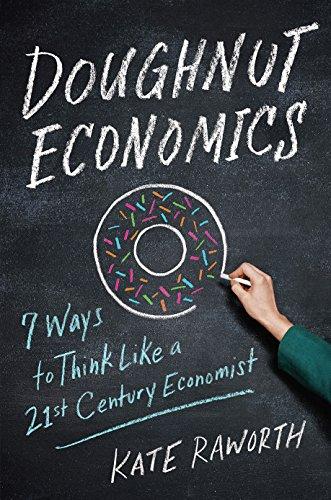
It was published in 2017 and was well-received in certain circles who felt that standard economics fell short. It provided an alternative economic framework centered around sustainability.
In 2017, she published a book called Donut Economics.
— Episode: Is Economic Growth the Wrong Goal? (Ep....
Episode: Is Economic Growth the Wrong Goal? (Ep. 429 Update...
It was published in 2017 and was well-received in certain circles who felt that standard economics fell short. It provided an alternative economic framework centered around sustainability.
In 2017, she published a book called Donut Economics.
It was avidly consumed in certain circles, especially in places that pay attention to standard economics but feel that standard economics comes up short.
Kate Raworth's book, Doughnut Economics, is essentially an alarm, a warning that the blind pursuit of economic growth leaves out too many people and puts too much strain on the planet's resources.
Episode: 519. Has Globalization Failed?
It was mentioned in the context of a discussion about how traditional economic models have focused on maximizing economic efficiency and GDP, which has negatively impacted the environment.
So the standard economics I learned was not based on a delicately balanced living planet. There wasn't really a planet. Anything natural was called an environmental externality.
So imagine a donut, the kind it's got a hole in the middle, and we want everybody to be living in the donut.
That means no one is in the hole in the middle where they're falling short on the essentials of life--without food or water, health care, housing, education, political voice.
But at the same time, don't overshoot the outer crust of the donut. We put so much pressure on our planet, we begin to push her out of balance, and we cause climate breakdown and we acidify the oceans and create a hole in the ozone layer.
Episode: 519. Has Globalization Failed?
It was mentioned that the book uses the analogy of a donut to emphasize the importance of balancing social needs with environmental limits for a sustainable economy.
So the standard economics I learned was not based on a delicately balanced living planet. There wasn't really a planet. Anything natural was called an environmental externality.
So imagine a donut, the kind it's got a hole in the middle, and we want everybody to be living in the donut.
That means no one is in the hole in the middle where they're falling short on the essentials of life, without food or water, health care, housing, education, political voice.
But at the same time, don't overshoot the outer crust of the donut. We put so much pressure on our planet. We begin to push her out of balance, and we cause climate breakdown.
And we acidify the oceans and create a hole in the ozone layer. So it's a balance: meet the needs of all people within the means of the planet.