
Podcast
Stuff You Should Know
It was mentioned as a multi-volume book series written by Jonathan Israel that delves into the Enlightenment era, with a focus on Baruch Spinoza's influence and suggesting that the traditional understanding of the Enlightenment might have been a diluted version.
There's a dude named Jonathan Israel who just came out with, I think this third volume of a three volume set on the enlightenment.
— Episode: SYSK Selects: How The Enlightenment Work...
Episode: SYSK Selects: How The Enlightenment Works
It was mentioned as a multi-volume book series written by Jonathan Israel that delves into the Enlightenment era, with a focus on Baruch Spinoza's influence and suggesting that the traditional understanding of the Enlightenment might have been a diluted version.
There's a dude named Jonathan Israel who just came out with, I think this third volume of a three volume set on the enlightenment.
where he basically says, forget the philosophes. You got to look at Baruch Spinoza, who was a Dutch philosopher from I think the 17th century.
He was the one who came up with the enlightenment ideas. And had we followed his enlightenment ideas, there wouldn't have been any governments now or there wouldn't be any religion whatsoever.
He came up with the real revolutionary enlightenment and what we got, what we think of as the enlightenment was a watered down moderate version that was changed.
Episode: SYSK Selects: How The Enlightenment Works
It was mentioned as a three-volume set on the enlightenment, covering several thousand pages, but the speaker thought it was a watered-down, moderate version of the enlightenment.
There's a dude named Jonathan Israel who just came out with, I think this third volume of a three volume set on the enlightenment.
And he wrote literally several thousand pages of it.
And it's considered an obscure text.
He basically says, forget the philosophes. You got to look at Baruch Spinoza, who was a Dutch philosopher from I think the 17th century.
He was the one who came up with the enlightenment ideas. And had we followed his enlightenment ideas, there wouldn't have been any governments now or there wouldn't be any religion whatsoever.
Episode: SYSK Selects: How The Enlightenment Works
It was mentioned as a multi-volume work covering the Enlightenment, which was said to be very thorough and detailed, possibly spanning several thousand pages.
There's a dude named Jonathan Israel who just came out with, I think this third volume of a three volume set on the enlightenment. And he wrote literally several thousand pages of it.
And it's considered an obscure text.
He probably doesn't even think that he covered it in full.
No, I'll bet he doesn't. Although he's fourth volume coming soon.
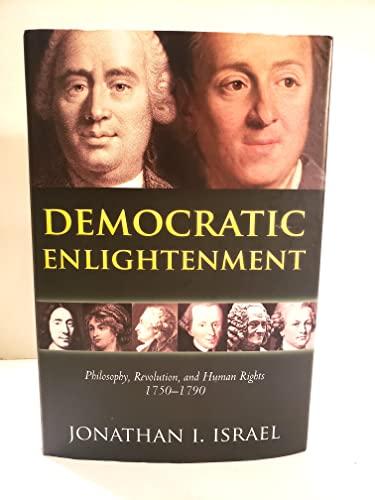
Democratic Enlightenment, I think. He's the one who wrote that several thousand page trilogy.
Episode: SYSK Selects: How The Enlightenment Works
This multi-volume work by Jonathan Israel was mentioned as being thousands of pages long and exploring the Enlightenment in depth. It was mentioned that he believed Spinoza was the true originator of Enlightenment thought, not the Philosophes.
There's a dude named Jonathan Israel who just came out with, I think this third volume of a three volume set on the enlightenment.
And he wrote literally several thousand pages of it.
And it's considered an obscure text.
He probably doesn't even think that he covered it in full.
where he basically says, forget the philosophes. You got to look at Baruch Spinoza, who was a Dutch philosopher from I think the 17th century.